Gen Z Protests Cost Rs 80B: Is Government’s Recovery Plan Adequate?
Khatapana
September 24, 2025 8 min read
 Reviewed by Kailash Panday, Chartered Accountant & Corporate Lawyer
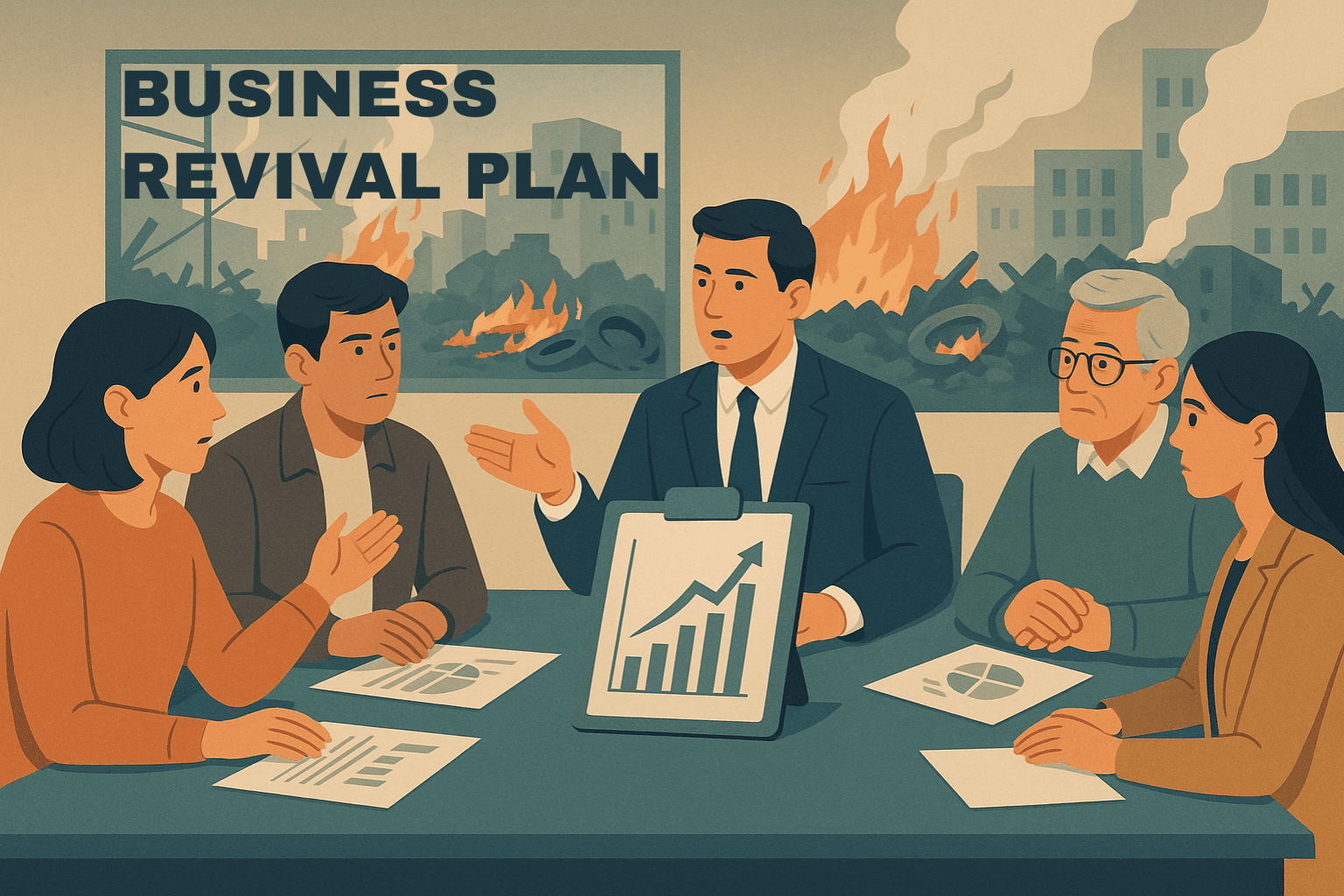
Nepal’s business community has been through crises before; earthquakes, floods, pandemics. But what happened during the recent Gen Z protests hit entrepreneurs like a freight train, leaving them staring at losses they never even imagined.
And honestly, the damage itself isn’t even the biggest problem. It’s the uncertainty that keeps business owners awake at night. How do you even begin to rebuild when your loan payments are due, your entire stock is gone, and your insurance claim is buried somewhere in bureaucratic purgatory?
To address this crisis, the government finally brought something to the table. The Ministry of Finance has drafted something called an 'Integrated Business Recovery Plan.' The idea is to give these struggling businesses a much-needed breather – thinking things like restructuring loans, tossing in some tax breaks, offering cheaper credit, and even releasing part of insurance claims upfront.
The Cabinet has already approved the draft plan and directed execution. Provisions are categorized by agency (MoF, MoFE, NRB, Insurance Authority).
And that raises the big question: why now, and why does it matter so much?
Background: Why a Recovery Plan Now?
If you’re wondering why we’re even talking about a recovery plan, just look at the chaos from the Gen Z movement. It was a complete punch to the gut for businesses across the country. We’re talking about stockpiles of goods reduced to ash, warehouses stripped bare, and production lines that went dead silent. Imagine being a business owner who watched your entire livelihood disappear overnight.
According to FNCCI, the cost of the destruction is nearly Rs. 80 billion. That’s not some abstract figure. It’s months of lost profit, loans that still have to be paid back, and thousands of people now living with the fear that their jobs could vanish any day.
The private sector has been blunt about what it needs: security, cooperation, and accountability. Businesses can’t operate in dignity when they’re worried about attacks on their shops and factories. And if those responsible for vandalism simply walk free, what message does that send to investors? Why would anyone risk pouring more money into an economy where property rights don’t feel secure?
There’s also a bigger shadow looming. Nepal is set to graduate from the “Least Developed Country” list in 2026. On paper, that’s supposed to be a milestone worth celebrating. But with the economy already shaky, shocks like this could turn that graduation into a liability rather than a badge of progress. Even regional neighbors have considered delaying their own transitions when instability hits, and Nepal might have to weigh the same option if confidence keeps slipping.
Seen against this backdrop, the Integrated Business Recovery Plan is a desperate attempt to keep businesses alive, protect jobs, and stop Nepal from stumbling right as it’s trying to climb onto the global stage.
Inside the Integrated Recovery Plan
So, what’s actually inside this much-talked-about recovery plan? Well, it’s the kind of stuff that won’t make anyone rich overnight, but might just stop a lot of businesses from sinking. Let’s unpack them one by one.
a) Loan Restructuring & Repayment Deferrals
First up: loans. If you own a shop or a factory, chances are you’ve got loans hanging over your head. The problem? Even if your business is literally in ashes, the bank still expects its installment every month.
Nepal Rastra Bank has been directed to extend repayment periods, with duration of extention to be set by the central bank through guidelines. That means if your repayment was due in Bhadra or Ashoj, you’d now get to push it back without the bank breathing down your neck.
For many entrepreneurs, this is more about sanity than it is about numbers. Imagine trying to pay off debt while you’re also figuring out how to replace inventory, repair property, and reassure employees. A momentary pause won’t solve everything, but it can definitely keep businesses from collapsing altogether.
b) Concessional Loans
Next, there’s talk of cheap loans. Affected businesses can now borrow at the base rate plus a maximum premium of 0.5%. That’s about as concessional as loans get in Nepal’s banking system.
And the plan goes one step further with something called the Payroll Protection Scheme. If you’re struggling to pay salaries, you can take a dedicated loan for wages, and here’s the kicker: the government will cover 2% of the interest cost for six months through the Relief Fund. Basically, they’d rather help keep your staff paid than see them jobless.
For small and medium-sized businesses, which usually run on razor-thin margins, these measures could make the difference between keeping the lights on or sending workers home.
c) Insurance Payouts
What’s unusual about all of this is that insurance companies are being nudged to release 50% of claims upfront based on preliminary surveyor verification. Normally, anyone who has filed an insurance claim knows it’s like watching paint dry because the paperwork alone can take months.
But the idea here is speed. Businesses need liquidity right now, not six months from now. Half the claim money, paid out immediately, gives owners enough to buy new stock, repair machines, or at least restart operations.
The good news is, (according to the Ministry of Finance,) insurers are on board. They’ve agreed in principle to cooperate, which is rare to see. And if they actually deliver on this promise, it could be one of the most practical parts of the plan.
d) Tax Relief
Then comes everyone’s favorite (or least favorite) topic: taxes. The plan throws in a few lifelines here too.
- Extended deadlines: Businesses may now get extra time to file VAT, advance tax, education service fee, and luxury tax. If you missed the September deadline, you’re not immediately in trouble.
- Customs concessions: 50% customs & excise exemption for importing materials to rebuild. Star hotels can re-avail customs relief only once (if damaged).
- Inventory write-offs: If your stock was ruined and it wasn’t insured, you can still count it as a business expense for tax purposes, and it's eligible for VAT credit as well.
- Income tax breaks: The government has signaled it’s willing to adjust income tax obligations for affected firms.
For once, it feels like the taxman is cutting some slack instead of adding more pressure.
e) Government Subsidy on Interest
And here’s the part most businesses will actually feel in their wallets. Under the Payroll Protection Scheme, if you take out a loan just to cover salaries, the government will step in and pay 2% of the interest for six months.
In other words, if you borrow to keep your staff paid, the government will pick up part of the tab.
We’ve seen interest subsidies before ;during COVID, for example, but this time it’s laser-focused on one thing: making sure people don’t lose their jobs because their employer ran out of cash.
Pulling It All Together
Put simply, the recovery plan is trying to give businesses breathing space. Basically, more time to repay old loans, cheaper access to new loans, faster insurance payouts, fewer tax headaches, and some direct help on interest costs.
None of these measures alone can rebuild an economy. But taken together, they give struggling businesses a fighting chance to stand back up without being crushed under debt, bureaucracy, or empty cash registers.
Reactions & Concerns
So far, the plan looks promising on paper. But if there’s one thing everyone in Nepal has learned, it’s that policies and implementation are two very different beasts.
Private Sector
From the private sector’s side, the overall reaction has been relief mixed with a healthy dose of skepticism. Business groups like FNCCI have been calling for exactly these kinds of measures; loan restructuring, tax breaks, faster insurance payouts. But their bigger worry is whether these promises will actually reach businesses quickly, or get tangled in paperwork and delays. For shopkeepers and small factories, weeks of waiting can mean having to shut down entirely.
Central Bank
On the other hand, central bankers are not exactly thrilled. Their concern is that once again, the heavy lifting is being pushed onto Nepal Rastra Bank. Every time there’s a crisis; be it the earthquake in 2015, the COVID-19 pandemic, or the floods of 2081, the government has leaned on NRB to step in. That has left the banking sector with an uncomfortable legacy: non-performing loans (bad loans that may never be repaid) have already climbed above 5 percent. For a country like Nepal, that’s a flashing red light.
The Fiscal Vs Monetary Policy Debate
This leads to the age-old debate: should relief come from fiscal policy (the government budget) or monetary policy (the central bank’s toolkit)? In theory, fiscal policy should step in during crises by providing tax incentives, subsidies, and direct support. But because Nepal’s budget is often stretched thin, the government tends to lean on NRB instead. Bankers argue that this over-reliance is unhealthy, because it uses other people’s deposits to patch holes that the state itself should be fixing.
Comparisons to Past Relief Measures
If all this sounds familiar, that’s because Nepal has been here before.
- 2015 Earthquake: NRB rolled out loan restructuring and interest subsidies to help businesses get back on their feet. It provided breathing space, but many borrowers never fully recovered, and banks carried the scars for years.
- COVID-19 Pandemic: Again, loan repayment deadlines were extended, concessional loans offered, and interest subsidies provided. These measures prevented a wave of bankruptcies, but also created a culture where some borrowers began to expect easy extensions.
- 2081 Floods: NRB stepped in once more, offering relief to flood-hit businesses, but the burden on banks grew heavier.
The lesson here is, these policies do work in the short term, and they keep businesses alive during immediate crises. But over time, they strain the banking sector, pile up bad loans, and leave less room for fresh credit to healthy businesses. It’s like giving painkillers without treating the underlying disease.
That’s the risk now. If the government keeps reaching for the same medicine, banks may find themselves too weak to fund new growth when the economy really needs it.
Challenges & Implementation Questions
Even if the plan is passed tomorrow, several questions are still left hanging in the air:
- Insurance payouts: Will insurers really hand out 50% of claims upfront, or will businesses find themselves stuck in endless documentation battles? The intention is good, but this industry doesn’t exactly have a track record of moving fast.
- Loan restructuring: Giving businesses more time sounds fair, but what about those who were already struggling to pay even before the protests? Extending deadlines for everyone could encourage bad habits and punish businesses that played by the rules.
- Tax exemptions: Cutting duties and taxes will definitely help businesses, but it also means less revenue for the government at a time when it’s already struggling with budget gaps. Can the state afford it?
- Monitoring employee retention: Cheap loans come with the condition that businesses don’t fire workers. But who’s going to check? Without a clear monitoring system, some firms might quietly reduce staff anyway while still pocketing the benefits.
These are issues that determine whether the recovery plan becomes a genuine lifeline or just another announcement that fades away.
What Next?
For now, all eyes are on Singha Durbar. The Integrated Business Recovery Plan is sitting in front of the Cabinet, waiting to be debated and passed. Until that happens, every relief measure; from loan extensions to tax breaks, remains a promise rather than reality.
Talking about politics, Nepal is being run by an interim government, which means shifting priorities and fragile consensus. Even if the Cabinet agrees on the plan, the pace of execution could be slowed down by bureaucracy, political wrangling, or simple lack of urgency. Businesses, meanwhile, don’t have the luxury of waiting. Rent is due, salaries are due, and customers won’t come back just because there’s talk of a plan.
So the real timeline question is: when will this relief actually reach the ground? Will shopkeepers see extended loan deadlines within weeks, or will they be filling out forms for months? Will insurers release claims promptly, or will payouts get stuck in “review” forever?
There’s also a bigger implication here. If this plan works, it could serve as a blueprint for how Nepal responds to future political crises that damage the economy. Because let’s be honest: protests, shutdowns, and unrest aren’t going away anytime soon. Having a ready-made playbook could save weeks of delay the next time turmoil strikes.
Final Thoughts
Ultimately, the Integrated Business Recovery Plan truly represents a lifeline. For businesses devastated by the Gen Z protests, it offers crucial breathing space, providing more time to repay loans, access to more affordable credit for salaries, quicker processing of insurance claims, and some much-needed relief from tax burdens.
Th proposal has been approved with clear execution mandates but Nepal has a history of announcing significant relief measures that, unfortunately, don't always translate effectively into practice. Should that pattern repeat here, the Rs 80 billion loss already sustained by the private sector could escalate into a much more formidable challenge.
Yet, the importance of hope cannot be overstated. For many entrepreneurs who have seen their life's work severely impacted or destroyed, the mere prospect of support offers something vital to hold onto. The coming weeks will reveal whether this plan marks a genuine turning point or simply becomes another missed opportunity. What's certain is that formulating policies is the easier task. The profound challenge lies in ensuring these policies genuinely work for those who need them most, and doing so before precious time runs out.
Additional Resources:
Starting a business in Nepal?
Register your company online — name reservation, MOA/AOA, PAN/VAT and OCR filings, all in one place.


Related Blogs

Subscribe to our newsletter
Get latest news and updates directly to your email.