Nepal Rastra Bank’s Q2 Review of Monetary Policy (2082/83)
Khatapana
March 3, 2026 20 min read
 Reviewed by Kailash Panday, Chartered Accountant & Corporate Lawyer
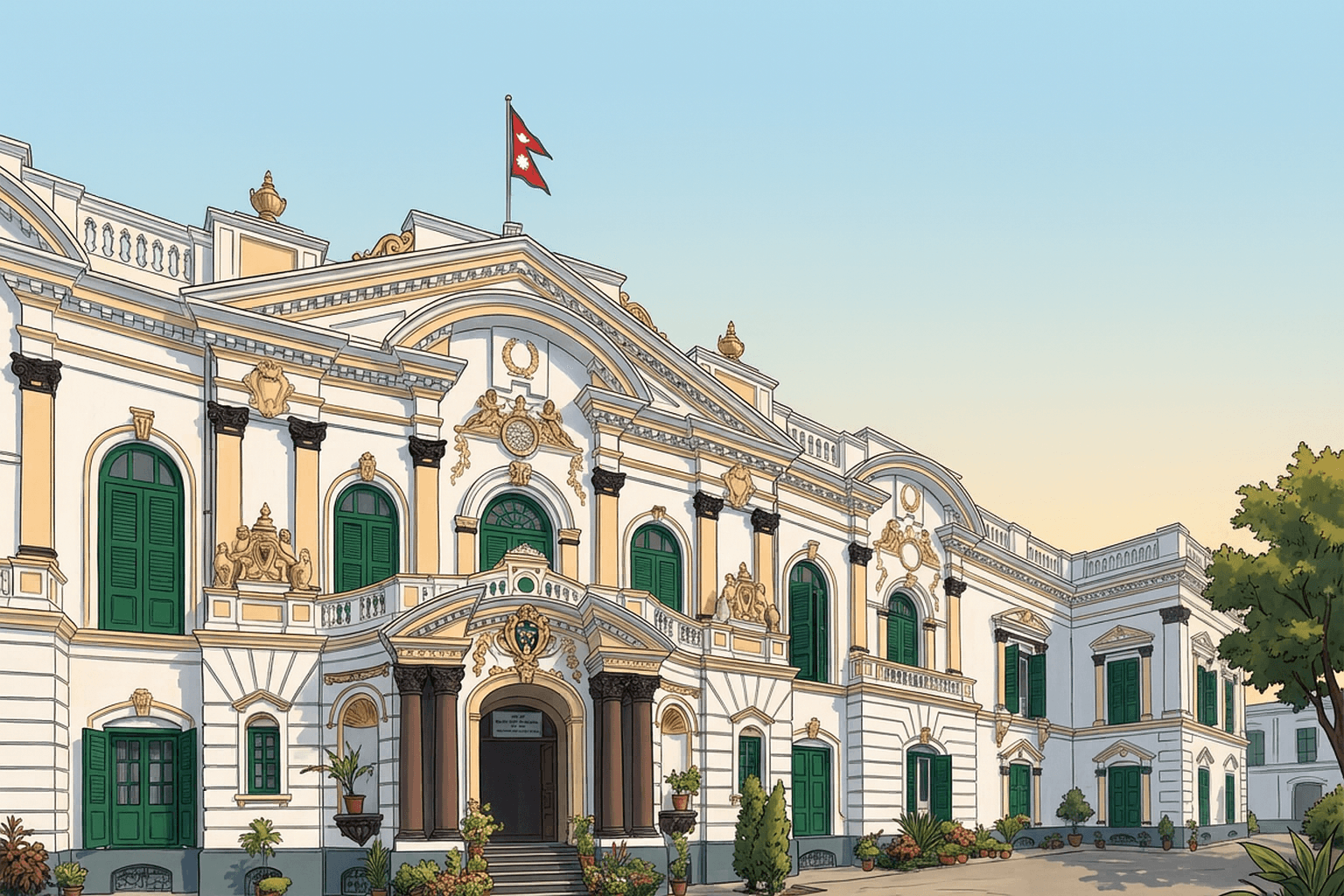
A complete breakdown of Nepal Rastra Bank’s Q1 Review for FY 2082/83, explaining inflation, remittance, recent geopolitical developments, and where the Nepali economy is heading.
If you've been wondering how the Nepali economy is actually doing; not the headlines, not the rumours, but the real picture, NRB is back with the answer. The Semi-Annual Review of the Monetary Policy for Fiscal Year 2082/83 is out, and it does exactly what it sounds like: it tracks where the economy was supposed to be at this point in the year, where it actually is, and what needs to happen to close the gap. Think of it as the country's economic report card, except instead of grades, you get interest rates, inflation figures, remittance numbers, and a set of policy decisions that quietly shape everything from the price of vegetables at your local market to whether your loan application gets approved.
We've already broken down the monetary policy itself and the first quarterly review for FY 2082/83. If you haven't read those yet, we highly recommend you do, because this review builds directly on both of them. But even if you're coming in fresh, don't worry. This piece will walk you through everything you need to know, from the ground up.
Before we get into the numbers and the policy decisions, though, let's make sure we're all working with the same foundation. Because to understand what NRB is saying, and why it matters, you first need to understand what NRB actually is, what it's trying to do, and how this whole review process works. It's simpler than it sounds, and once it clicks, the rest of the article will make a lot more sense.
First, The Basics - What Are We Actually Talking About?
What Is Nepal Rastra Bank?
Nepal Rastra Bank, or NRB, is Nepal's central bank, the bank of all banks. It doesn't give you a personal savings account or a home loan directly, but it sets the rules that every other bank follows. It controls how much money circulates in the economy, how cheap or expensive it is to borrow, and how the country manages its finances with the rest of the world. If Nepal's economy were a car, NRB would be the driver, making constant adjustments to keep the vehicle on the road at a safe, steady speed.
The Main Tool: Interest Rates
The main tool NRB uses is the interest rate, essentially the price of borrowing money. Lower rates mean cheaper loans, more borrowing, more spending, more economic activity. Higher rates cool things down. It's a balancing act, and NRB is always adjusting.
NRB's Two Core Goals
Two goals sit at the heart of everything NRB does. The first is price stability, keeping inflation from rising too fast, because when prices spiral, savings lose value and everyday life becomes harder. The second is external stability, making sure Nepal holds enough foreign currency to pay for what it imports, so the country doesn't find itself financially exposed to the world.
What Is a Semi-Annual Review?
When NRB announces its monetary policy at the start of each fiscal year, it sets a plan based on how it expects the economy to behave. But reality rarely follows the plan exactly. So every quarter, and most comprehensively at the halfway point, NRB reviews what's actually happened versus what was expected, and adjusts accordingly. That's the semi-annual review. Think of it as a highly consequential mid-year check-in, done publicly, with real policy consequences.
Global Factors: The World Nepal Is Operating In
Nepal certainly doesn't exist in a vacuum. What happens globally with oil prices, trade flows, the economic health of our neighbors, ripples directly into Nepali households, businesses, and NRB's calculations. So before zooming into Nepal's own numbers, it's worth understanding the world this review was written against.
The International Monetary Fund estimates that the global economy grew by 3.3% and is expected to hold that same rate through 2026. That headline stability, however, masks significant underlying tension. Geopolitical conflicts and trade polarization, countries increasingly splitting into rival economic blocs and imposing restrictions on each other, are making expansion harder than it looks on paper. At the same time, investment in technology has been boosting productivity in ways that have partially offset these headwinds.
The divide between rich and developing economies remains stark. Developed nations are growing at just 1.7%, expected to tick up to 1.8% in 2026. Emerging and developing economies, still building their infrastructure and industries, are growing much faster; 4.4% this year, projected at 4.2% next. Nepal sits within this second group.
India and China: Nepal's Most Important Neighbors
For Nepal specifically, the performances of India and China matter enormously. India, our primary trading partner, grew at 7.3% but is projected to moderate to 6.5% in 2026. China grew at 5.0% and is expected to slow to 4.5%. Both remain strong by global standards, but the direction (a slight deceleration in both) is something NRB factors into its outlook, since a softer Indian economy can mean weaker demand for Nepali goods and fewer opportunities for Nepali workers in those markets.
Global Inflation Is Finally Retreating
On inflation, the global picture is encouraging. After years of elevated price pressures such as pandemic-era supply disruptions, energy shocks, food crises, global inflation is finally retreating. The IMF projects it to fall from 4.1% in 2025 to 3.8% in 2026 and further to 3.4% in 2027. For Nepal, this matters because cheaper global prices, especially for oil and food, directly reduce what we pay for imports and take pressure off NRB's job of keeping domestic prices stable. Many central banks around the world have responded to this easing inflation by maintaining supportive, flexible monetary policies. NRB has been doing the same.
Unrest in the Middle East: The Risk This Review Couldn't Have Anticipated
But there's something this review couldn't have fully accounted for. The document was finalized before the United States and Israel carried out strikes on Iran, and before Tehran retaliated by hitting US military bases in host countries across the Middle East. These developments have introduced a new layer of geopolitical risk that was not baked into NRB's projections. The Middle East is central to Nepal's remittance economy, as a significant share of Nepali workers abroad are employed in Gulf countries, several of which sit within or adjacent to the region now experiencing active conflict escalation.
Any serious disruption to Gulf economies, labor markets, or oil supply chains could ripple back into Nepal through two channels that this review identifies as pillars of economic strength: remittance inflows and fuel import costs. This doesn't change the fundamental soundness of what NRB has assessed and decided, but it does mean the risk environment going forward is meaningfully more uncertain than when this review was written.
Nepal's Prices: The Good News Story of This Review
Of all the indicators that affect daily life, inflation is the most personal. It shows up in your grocery bill, your child's school supplies, the cost of hiring help. When it's high, your money quietly loses value. When it's low and stable, your purchasing power holds.
So what did NRB find?
Consumer Inflation: A Dramatic Drop
Annual consumer inflation fell from 5.41% in Poush 2081 to 2.42% in Poush 2082. To put that concretely: a year ago, if you were spending Rs. 10,000 a month on household expenses, the same lifestyle would cost Rs. 10,541 a year later. Today, that same basket would cost about Rs. 10,242. That difference is felt in real households every single month.
NRB had set a target of keeping average annual consumer inflation at around 5% for the fiscal year. In the first six months, actual average inflation came in at just 1.70%, well below target. That's a strong result, and the primary driver behind it is something most Nepali households felt directly at the market: food prices fell. The food and beverages group, which accounts for 35.5% of the consumer price index, actually decreased by 0.09%. Prices of food grains, pulses, vegetables, spices, and other food crops all dropped meaningfully. If your tarkari and dal bill has felt lighter recently, this is why.
Why Did Inflation Fall? The Answer is Food Prices
NRB had set a target of keeping average annual consumer inflation at around 5% for the fiscal year. In the first six months, actual average inflation came in at just 1.70%, well below target. That's a strong result, and the primary driver behind it is something most Nepali households felt directly at the market: food prices fell. The food and beverages group, which accounts for 35.5% of the consumer price index, actually decreased by 0.09%. Prices of food grains, pulses, vegetables, spices, and other food crops all dropped meaningfully. If your tarkari and dal bill has felt lighter recently, this is why.
Non-Food Inflation: Still Present, Still Moderate
The non-food and services group (rent, healthcare, education, transport) still saw inflation of 3.81%. Moderate, manageable, but a reminder that not everything got cheaper.
A Warning Sign on the Horizon
Here's the nuance NRB is careful to flag: this low inflation environment may not last. Wholesale prices (what businesses pay before goods reach consumers) rose from 4.01% annual inflation in Poush 2081 to 5.17% in Poush 2082. When businesses' input costs rise, they eventually pass that on to you at the till. Similarly, the salary and wage index jumped from 2.85% to 6.03% over the same period. Rising wages are broadly good for workers, but they also push up business operating costs, which again feeds into future prices. NRB's review explicitly notes that these trends "are expected to put some pressure on inflation in coming days."
The message from NRB, then, is this: enjoy the low inflation while it lasts, but don't assume it's permanent. The bank is watching these underlying pressures carefully, and its policy stance, which we'll get to shortly, reflects a deliberate intention to support economic growth now, while keeping a watchful eye on the horizon.
The Money Flowing In and Out: Nepal's External Position
If inflation tells us about prices inside Nepal, the external sector tells us about Nepal's financial relationship with the world, how much money is coming in, how much is going out, and whether the country is standing on solid ground internationally. For a nation that imports far more than it exports and depends heavily on money sent home by workers abroad, this is arguably the most consequential part of any economic review.
And in this one, it's the most impressive chapter.
Exports: +43.8%
Exports jumped 43.8% in the first six months of fiscal year 2082/83, reaching Rs. 142 Arba 2 Crore. That's an extraordinary number. Every carpet, every tea chest, every handicraft sold abroad is foreign currency flowing into Nepal, and a near-44% surge in exports is the kind of performance that signals genuine momentum in Nepali production.
Imports: +14.2%, Trade Deficit: +10.1%
Imports also grew, by 14.2%, reaching Rs. 939 Arba 2 Crore. The trade deficit (the gap between what we buy from the world and what we sell to it) widened by 10.1% to Rs. 797 Arba. Nepal still imports far more than it exports. But here's the crucial point: exports grew three times faster than imports. That's the right direction.
Remittances: +39.1%
The trade deficit, though, is ultimately covered by remittances, and this is where the numbers become genuinely remarkable. In the first six months of fiscal year 2082/83, remittance inflows surged by 39.1%, reaching NPR 1,062 Arba 93 Crore. For context, that single figure, exceeds the entire import bill for the same period. It more than covers the trade deficit. And compare it to the same period of the previous year, when remittances grew by just 4.2%. The acceleration from 4.2% to 39.1% is staggering, and it is the single biggest reason why virtually every other external indicator in this review looks healthy.
Current Account and Balance of Payments
The consequence of all this incoming money is visible in two broader measures. Nepal's current account, a summary of all money flowing in and out through trade, services, and remittances, posted a surplus of Rs. 429 Arba 91 Crore, more than double the Rs. 165 Arba 67 Crore surplus in the same period last year. The balance of payments, a broader measure including investment and financial flows, showed a surplus of Rs. 501.24 billion, again roughly double the previous year's figure. More money flowing in than out, by a widening margin. That's a position of real strength.
Foreign Exchange Reserves: Worth 18.1 Months of Imports
The most visible consequence of all of this is Nepal's foreign exchange reserves. Think of reserves as the country's emergency savings account; the stockpile of foreign currencies NRB holds to pay for imports and service foreign debts. NRB's own policy benchmark requires that reserves be sufficient to cover at least seven months of imports. As of Poush 2082, Nepal's reserves cover 18.1 months of imports, more than two and a half times the minimum threshold. That's not just comfortable. That's a cushion of extraordinary depth.
The Geopolitical Shadow Over This Strength
But this is precisely where the post-review geopolitical developments become relevant. A substantial share of those remittances come from Nepali workers in the Gulf; Saudi Arabia, UAE, Qatar, Kuwait, and neighboring countries that are now part of a region experiencing active military escalation. If this conflict disrupts Gulf labor markets, reduces worker remittances, or triggers an oil price spike that raises Nepal's import bill, the external sector picture could shift more quickly than NRB's projections anticipated. The reserves provide a significant buffer of 18.1 months, but the risk is real, and it deserves to be named.
For now, Nepal's external position is as strong as it has been in years. NRB has used that strength wisely, and as we'll see in the second half of this article, the policy decisions that follow are built on this foundation of stability.
The Government's Books: Spending, Earning, and Borrowing
While NRB manages the monetary system, the Government of Nepal manages fiscal policy. These two systems are deeply intertwined. Government spending puts money into the economy, and how the government funds that spending has direct implications for NRB's job of managing money supply and inflation. So how are the government's finances looking at the halfway point?
Functional, but with an important caveat that deserves attention.
Total Government Expenditure
Total government expenditure increased by 3.4% by the second quarter, reaching Rs. 690 Arba 22 Crore. Breaking that down: current expenditure, as in, the cost of keeping the government running, paying salaries, funding offices, was Rs. 487 Arba 14 Crore. Financial management expenditure, covering debt repayments and financial obligations, was Rs. 153 Arba 65 Crore. And capital expenditure; money invested in building roads, schools, hospitals, infrastructure, was Rs. 49 Arba 43 Crore.
The Capital Expenditure Problem
That last number is the one worth sitting with. Capital expenditure represents just 7.2% of total government spending for the period. This is a persistent pattern in Nepal's public finances, and it matters because capital spending is the kind of spending that creates long-term economic value. It generates employment, reduces logistics costs, expands productive capacity, and lays the foundation for future growth. When a government consistently underspends on capital, it is essentially borrowing from its own future. The government has plans and budgets for infrastructure, but procurement delays, bureaucratic bottlenecks, and implementation challenges mean that money repeatedly fails to reach the ground.
Revenue Mobilization
On the revenue side, total mobilization, including amounts distributed to provincial and local governments, reached Rs. 577 Arba 40 Crore, up 3.2%. Revenue is growing, but spending is growing slightly faster, which means the gap has to be covered through borrowing.
Public Debt: Internal and External
In the second quarter, the government mobilized Rs. 212 Arba 24 Crore in public debt. Among that, Rs. 177 Arba 87 Crore came from internal sources, primarily bonds and treasury bills purchased by banks, and Rs. 34 Arba 37 Crore from external sources including multilateral lenders like the World Bank and Asian Development Bank.
What This Means for NRB
The internal borrowing figure matters to NRB specifically. When the government borrows heavily from domestic banks, it competes with private businesses for the same pool of available funds, what economists call "crowding out." NRB monitors this carefully because excessive government borrowing can drain the liquidity that businesses need to invest and grow. For now, the numbers are manageable. But as the government anticipates increased spending in the run-up to elections, which its own semi-annual budget review acknowledges will push aggregate demand and inflation somewhat higher, NRB will need to stay attentive to how that spending interacts with the monetary conditions it is trying to maintain.
Banks & Financial Sector: What's Happening Inside the Banks?
Most of us touch the economy most directly through the banking system; primarily through savings accounts, loans, transfers, digital payments. The health of the financial sector is therefore not abstract. It has a very real bearing on what interest rate you're offered when you walk into a bank, whether your loan application gets approved, and whether the institution holding your savings is on solid footing.
NRB's review of the financial sector presents a picture of abundance on one side and caution on the other.
Money Supply
Money supply, the total amount of money circulating in Nepal's economy, grew by 14.2% annually in Poush 2082, up from 10.2% in the same month of the previous year. The primary driver, as NRB's review explains, is the remittance surge. When workers abroad send money home and it enters the banking system, the total money supply expands. More money in circulation means more potential for spending and investment, which is broadly positive. NRB monitors this carefully because too much money chasing too few goods can eventually push prices up. For now, with inflation at 2.42%, this expansion is not a concern. But it is being watched.
Deposit Mobilization
Deposit mobilization tells a similarly positive story. Total deposits at banks and financial institutions grew by 5.7% during the review period, reaching Rs. 7,681 Arba 35 Crore, up from 3.7% growth in the same period last year. More deposits mean more raw material for lending, which is how savings get converted into investment and economic activity. On paper, the conditions for a credit boom are in place.
Private Sector Credit: The Central Puzzle
And yet private sector credit, that is actual loans flowing to businesses and individuals, grew by only 3.6%, reaching Rs. 5,697 Arba 17 Crore, an increase of Rs. 197 Arba 47 Crore. In the same period last year, credit had grown by 5.2%; Rs. 265 Arba 56 Crore. Not only is credit growth slowing, it is running dramatically below NRB's own target of 12% for the fiscal year. At the halfway point, the economy has achieved less than a third of the credit growth NRB had planned for. Banks have the money, the rates are low, and yet businesses and individuals are not borrowing at anywhere near the pace needed to drive meaningful investment-led growth.
This gap between available financial resources and actual productive borrowing, is the central economic puzzle of this moment, and it is the thread that runs through almost every policy decision NRB makes in this review.
Excess Liquidity: Too Much Cash, Sitting Idle
The liquidity picture makes this even more vivid. By the second quarter, NRB absorbed a total of Rs. 28,699 Arba 90 Crore in excess liquidity from the banking system through deposit auctions (Rs. 1,425 Arba 50 Crore), the standing deposit facility (Rs. 27,084 Arba 90 Crore), NRB bonds (Rs. 200 Crore), and the overnight liquidity facility (Rs. 12 Arba 50 Crore). Compare that to the same period last year, when net liquidity absorption was Rs. 13,999 Arba 80 Crore. NRB absorbed more than double the excess cash compared to the previous year. That is the scale of unused financial capacity sitting idle in the system. To help manage this structural surplus, NRB issued one-year NRB Bonds worth NPR 200 billion in multiple tranches, a tool specifically designed to soak up excess liquidity and keep short-term interest rates within the intended corridor. Additionally, NRB generated a net liquidity inflow of Rs. 493 Arba 4 Crore through the purchase of US dollars; up from Rs. 340 Arba 6 Crore in the same period last year, a direct consequence of managing the large volume of foreign currency flowing in from remittances.
Non-Performing Loans: The Warning Sign
Then there's the non-performing loan ratio; the measure of loans gone bad, where borrowers have stopped repaying and recovery looks uncertain. This is where the review's most serious warning sits. The average NPL ratio across banks and financial institutions rose from 4.62% in Ashar 2082 to 5.42% in Poush 2082, a jump of 0.8 percentage points in a single quarter. Breaking it down: commercial banks average 5.26%, development banks 5.75%, and finance companies a deeply concerning 11.85%.
To make this tangible: for every Rs. 100 lent out by the average bank, over Rs. 5 is not being repaid. For finance companies, it's nearly Rs. 12. That erodes income, reduces the capacity to lend further, and if left unchecked, can threaten the stability of individual institutions. NRB is clearly watching this trend with considerable attention, and several of the policy decisions in this review are directly aimed at preventing it from spiraling. The rise in bad loans reflects something real and human: businesses and households that borrowed during more optimistic times and are now struggling to generate enough income to service those debts in a sluggish economic environment.
Which brings us to what NRB has decided to do about all of this.
NRB's Decisions: What Policy Moves Have Been Introduced?
Everything in this review; the inflation data, the remittance surge, the sluggish credit growth, the rising bad loans, feeds into one central question: given this picture, what does NRB actually do? The answer in this semi-annual review is a carefully calibrated package of decisions, deliberately targeted at the specific pressure points the data reveals.
Interest Rates: Held Steady
Interest rates stay where they are. The bank rate remains at 5.75%, the policy rate at 4.25%, and the standing deposit facility rate is unchanged. These rates were already reduced through the first quarterly review earlier in the year. The bank rate came down to 5.75% and the policy rate to 4.25%, and NRB has decided that further cuts are not necessary right now. The required cash balance and statutory liquidity ratio are also maintained as is. The message is clear: money is already cheap, banks already have more than enough to lend, and cutting rates further won't solve a problem that isn't about the price of credit. The problem is confidence and demand, and that requires structural solutions, not another rate cut.
Priority Sector Lending: An Expanded List
Priority sector lending gets expanded. NRB previously required banks to maintain minimum lending levels in agriculture, energy, microfinance, and cottage and small-scale industries; sectors critical to livelihoods but not always the most attractive borrowers on paper. This review expands that list to include tourism, information technology, and export-oriented industries based on domestic raw materials. The addition is a deliberate signal about where Nepal's economic future lies. Tourism is recovering strongly, IT is a growing source of employment and foreign exchange, and export industries using domestic raw materials directly address the trade deficit. Alongside this expansion, the existing system of fixed minimum credit ratios for each sector is being changed to a more flexible arrangement, allowing banks to allocate across priority sectors intelligently rather than meeting rigid quotas.
Working Capital Loans: A Practical Overhaul
Working capital loans get a much-needed overhaul. Working capital loans are the financial oxygen of business operations. Short-term borrowing that covers payroll, supplier payments, and inventory. NRB is making two changes. First, banks can now determine the duration of Permanent Working Capital based on actual analysis of a borrower's cash flow and financial statements, rather than following a predetermined timeline. Second, the rule requiring a borrower's working capital loan balance to fall below 10% of the loan limit for at least seven consecutive days per year is being relaxed to 30%. That 10% rule sounds technical, but in practice it forced businesses to artificially reduce their loan balances in ways that had nothing to do with their actual operational needs. Moving it to 30% is a practical, business-reality-based fix that removes unnecessary friction from the credit relationship between banks and their business clients.
Relief for Highway-Displaced Businesses
Businesses displaced by highway expansion get relief. The expansion of the Mahendra Highway and the Mid-Hill (Pushpalal) Highway has physically displaced a number of enterprises and businesses along their routes, disrupting operations, forcing relocations, and interrupting income through no fault of the business owners themselves. NRB's review includes a targeted provision for these affected businesses: banks will recover only 10% interest on loans disbursed to them, and loan repayment can be rescheduled until the end of Ashar. It's a small provision in the scale of the full review, but it speaks to something important: NRB using its regulatory authority to ensure that the cost of national infrastructure development doesn't fall disproportionately on the small businesses caught in its path.
NDF Limit: Room to Hedge Currency Risk
The NDF limit is raised from 25% to 30% of core capital. Non-deliverable forwards are financial instruments that allow businesses and banks to lock in an exchange rate for a future transaction, protecting against the risk that the dollar will be more expensive when payment is due. By raising the NDF limit, NRB is giving banks more capacity to offer these currency risk management tools to clients. Given the large volumes of foreign currency flowing through Nepal's economy, and given the newly elevated risk of exchange rate volatility in the wake of Middle East escalation, this is a quietly important expansion. Businesses with import or export exposure now have more room to hedge that risk through their banks.
Opening the Door to Technology Investment
Foreign investment in technology infrastructure is being opened up. NRB's review eases restrictions on foreign investment in Data Centers, Cloud Computing, Robotics Labs, and Artificial Intelligence infrastructure, and encourages co-financing between foreign investors and domestic banks and financial institutions on such projects. Through an amendment to the NRB Foreign Investment and Foreign Loan Management Regulation, IT industries can now invest abroad up to USD 20,000 or its equivalent. The process of bringing in foreign loans and repatriating earnings from foreign investment has also been streamlined. These are not headline-grabbing provisions, but they matter: Nepal has been trying to attract technology investment for years, and regulatory friction has been one of the key barriers. Removing it, even partially, sends a meaningful signal to foreign investors and to Nepal's own growing tech community.
The Blacklist Reform: A Second Chance
The blacklist reform: perhaps the most human provision in the entire review. When a borrower fails to repay a loan, they are eventually placed on a credit blacklist, flagged as high-risk and cut off from accessing new loans at any bank or financial institution in Nepal. For a small business owner who hit a rough patch, a household that fell behind, or a farmer whose crops failed, being blacklisted can be financially devastating and nearly impossible to recover from, even when circumstances genuinely improve. NRB's review changes this. Banks and financial institutions will now be allowed to remove borrowers from the blacklist for up to six months, provided the borrower presents a valid reason for non-repayment and a genuine commitment to repay. During this window, they get a structured chance to settle their dues without being permanently locked out of the financial system. This is NRB acknowledging what the data already shows — that rising NPLs are not simply a story of bad borrowers, but of people and businesses caught in difficult circumstances. Accountability remains. But so does the possibility of recovery.
Cash Limits and the Push Toward Digital Payments
Cash transaction limits tightened, digital payments pushed forward. Payments of NPR 500,000 or more must now be made through an account payee cheque or directly through a bank account. Cash transactions above this threshold are no longer permitted. Alongside this, NRB will adopt a strategy to actively reduce cheque-based transactions in favor of electronic payments. Both measures serve the same purpose: bringing more economic activity into the formal, traceable financial system. When transactions flow through bank accounts and digital channels, they create records, improving tax collection, reducing the scope for illicit financial flows, and giving NRB better data on actual economic activity. For businesses and individuals, digital payments also build a financial track record that strengthens future loan applications.
Taken together, these decisions form a coherent and deliberate response to the economic conditions the review identified. Rates are steady because the price of money isn't the problem. Credit is being redirected toward sectors with genuine growth potential. Businesses are getting more operational flexibility. Struggling borrowers are getting a second chance. Technology investment is being invited in. And the economy is being nudged, provision by provision, toward greater formality and transparency.
The Road Ahead: What to Watch
With the policy decisions in place, the question becomes: where is Nepal's economy actually headed from here?
Agriculture: Mixed, But Net Positive
The review projects agricultural output to remain positive overall, even though paddy production is estimated to decline by 4.2% due to unfavorable weather — a reminder of Nepal's persistent vulnerability to climate variability. Other crops have performed better, partially offsetting the paddy shortfall.
Energy and Infrastructure: Progress on the Ground
In energy, an additional 389 megawatts of hydropower have been connected to the national transmission line in the first half of the fiscal year — every megawatt of reliable, domestic power reduces dependence on imported fuel and lowers the cost of production for businesses. The Nagdhunga–Naubise tunnel road is expected to come into operation this fiscal year, cutting travel time between Kathmandu and the western highway network and reducing logistics costs for goods moving across the country.
Tourism and the Service Sector
Foreign tourist arrivals reached 1,158,000 in 2025, and the service sector is gradually improving alongside growing domestic tourism, which the review attributes in part to remittance-driven increases in household income and investable resources.
Growth Projections and the Election Factor
The government's own semi-annual budget review projects economic growth at 3.5% for the fiscal year. Modest but positive, and expected to get a short-term boost from election-related spending. That same spending, however, is anticipated to push inflation somewhat higher as aggregate demand rises. NRB has flagged this explicitly, and it is one of the reasons the bank is maintaining its cautiously flexible stance rather than loosening further.
The Central Opportunity, and the Central Challenge
The central opportunity NRB identifies is also the central challenge: there is an abundance of low-cost financial resources available in the system right now. Interest rates are low, banks are liquid, reserves are strong, inflation is under control, and the question is whether the private sector can convert that availability into real investment, employment, and growth. Private sector credit running at less than a third of its target after six months is a clear signal that the bottleneck is not financial. It is confidence, demand, and the broader business environment. NRB has opened every door it can through monetary policy. Walking through them requires complementary action; on infrastructure delivery, on the regulatory environment for business, on skills and employment.
The Geopolitical Risk That Wasn't in the Review
And then there is the geopolitical risk that now hangs over the external sector in ways the review could not have anticipated. The escalation involving the US, Israel, and Iran, and Tehran's strikes on US military base host countries in the Middle East, injects real uncertainty into the region where a significant portion of Nepal's remittance workers are employed. Gulf countries like Saudi Arabia, UAE, Qatar, and Kuwait are not direct parties to the conflict, but they are close enough to feel its effects — through oil market volatility, through shifts in investor and business confidence, and through the potential disruption of labor markets that hundreds of thousands of Nepali workers depend on. If remittance growth were to slow sharply, the current account surplus would narrow, foreign exchange reserves would come under pressure, and the household income gains that have been supporting consumption and domestic demand would erode. Nepal's 18.1-month import coverage provides meaningful insulation, but it is not infinite, and the risk deserves to be watched with the same seriousness as any domestic economic indicator.
What This Means for You
Pull back from all the numbers, and what this review ultimately describes is a country in a window of genuine economic opportunity, with real risks on both sides of the ledger.
If you're a farmer, food prices have fallen, which eases household costs, though it also compresses selling prices for produce. The paddy shortfall is a concern, but overall agricultural output remains positive, and expanded priority lending means credit access for agricultural activities should gradually improve.
If you're a small business owner, this is one of the more favorable borrowing environments in recent memory. Rates are low, banks have money, and NRB has now directed the financial system to prioritize sectors including tourism, IT, and export manufacturing. Working capital loan rules are more practical. And if you've been blacklisted after a difficult period, there is now a structured path back into the financial system, provided you can present a credible repayment plan.
If you have family abroad sending remittances, the news has been excellent. Inflows are up 39.1%, which is benefiting households directly and underpinning the stability of the entire national economy. The caution flag is the Middle East situation. It doesn't represent an immediate threat to remittance flows, but it is a risk worth monitoring, particularly for families whose breadwinners are working in the Gulf.
If you're a saver, low inflation means your purchasing power is holding. The trade-off is that low interest rates mean modest returns on deposits. NRB's push toward digital payments and financial transparency makes the formal banking system progressively more efficient and trustworthy, a long-term argument for keeping your money in it.
And if you're a young professional thinking about Nepal's economic future, the directional signals in this review are the ones to watch. The inclusion of IT in priority lending, the easing of foreign investment in AI and data infrastructure, the push toward digital payments, these are the early-stage building blocks of the kind of knowledge economy that can generate high-quality jobs for educated Nepalis. The gap between that vision and today's reality is still wide. But NRB is laying groundwork, and the direction is right.
Final Thoughts
Nepal's economic fundamentals are, at this moment, genuinely sound. Inflation is low. Reserves are robust. The financial system is stable. Money is available and affordable. NRB has used the tools at its disposal thoughtfully; not overcorrecting, not panicking, but making precise, targeted adjustments to address specific problems while preserving the stability that has been carefully built.
The challenge ahead is not crisis management. It is conversion, i.e. turning available credit into real investment, turning export momentum into a sustainable industrial base, turning remittance inflows into productive domestic capital. Monetary policy can create the conditions for that conversion. NRB has done that. What happens next depends on whether the broader ecosystem (businesses, investors, the government, and all of us) rises to meet the opportunity that this window presents.
Nepal's economic engine has fuel in the tank, NRB has a steady hand on the wheel. The road ahead has real hazards (some old, some newly emerged.) But the foundation is solid, and the opportunity is real.
Starting a business in Nepal?
Register your company online — name reservation, MOA/AOA, PAN/VAT and OCR filings, all in one place.


Related Blogs

Subscribe to our newsletter
Get latest news and updates directly to your email.