Nepal Rastra Bank’s Q1 Review of Monetary Policy (2082/83)
Khatapana
December 4, 2025 13 min read
 Reviewed by Kailash Panday, Chartered Accountant & Corporate Lawyer
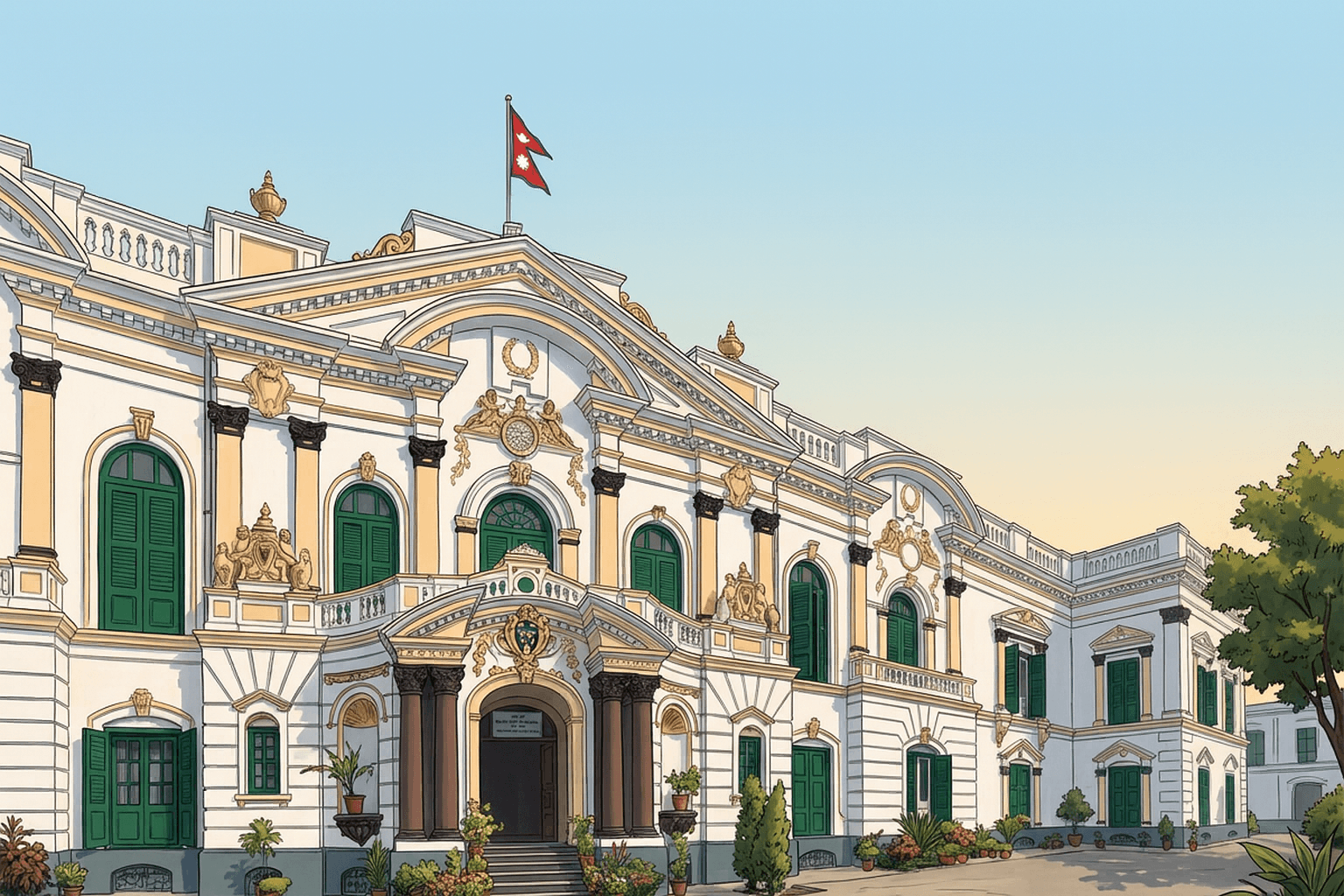
A simple breakdown of Nepal Rastra Bank’s Q1 Review for FY 2082/83, explaining inflation, remittance, banking changes, and where Nepal’s economy is heading.
A student’s performance at school is demonstrated through a report card. But how does a country measure how it’s economy is doing? Well, for Nepal, the answer lies in the official monetary policy review published by NRB, a document that tracks all the progress, challenges, and warning signs of the Nepali economy over the past quarter. It’s the closest thing Nepal has to a “report card” on how our economy is doing, what’s going well, what’s worrying, and what the central bank plans to do next.
These reviews should be understood by every citizen as if their life depends on it (because honestly, it does.) But the problem is, they’re full of technical language, charts, ratios, and economic jargon that feel like reading a different language altogether.
So today, we will walk through the official Monetary Policy Review of the First Quarter of FY 2082/83 with as much simplicity as possible. We will cover everything from how political protests and weather shocks affected the economy, to what’s happening globally, to why inflation is low, why remittances are booming, and how the Nepal Rastra Bank (NRB) is adjusting interest rates and banking rules to keep the economy stable.
By the end, you’ll understand exactly where Nepal’s economy stands today, what NRB is worried about, and what this means for you as a citizen, worker, entrepreneur, or investor.
And to understand all this, we need to begin where the review itself begins, with the dramatic backdrop against which this fiscal year started. Let’s dive in.
A Turbulent Start to the Fiscal Year
To truly understand NRB’s decisions, we have to first understand the situation Nepal walked into at the start of FY 2082/83.
This wasn’t a normal, quiet beginning.
The Gen-Z Protests Changed Everything
In late Bhadra, Nepal witnessed something rare. A youth-led protest movement that swept across the country in a matter of days. The Gen-Z movement shut down businesses, disrupted supply chains, and led to damage of both public and private property. Apart from a political event, this was just as big of an economic shock to the nation.
For the Nepal Rastra Bank, these kinds of shocks are huge. When people can’t work, when markets close unexpectedly, or when investors panic, the banking system feels the pressure. NRB had to respond with flexibility, relief measures, and careful monitoring so the disruption didn’t turn into a banking crisis (we'll dive deeper into this later in the article)
Nature Didn’t Help Either
As if political turmoil wasn’t enough, the weather added its own twist. The monsoon arrived later than usual, delaying the plantation of paddy and other crops. Then suddenly, heavy rainfall in Ashoj hit key agricultural areas, triggering floods and landslides.
For the economy, this means lower crop production, lower incomes for farmers, higher risk of food inflation, slower rural spending, and ultimately, added pressure on supply chains.
NRB noted all these risks clearly in its review, reminding us that agriculture is still one of Nepal’s most fragile but crucial economic pillars.
A New Government and a New Economic Mood
As protests settled, a new government took office, promising to restore law and order, improve governance, rebuild damaged infrastructure, and make policies that support private businesses.
This is important for NRB because the central bank can only do so much alone. Without political stability, monetary policy becomes way less effective. So this new political direction gave NRB more room to act confidently.
A Mixed Beginning for the Economy
Despite the chaos, not everything was gloomy. The Nepal Rastra Bank observed foreign tourist arrivals increasing, remittances rising sharply, imports recovering to pre-COVID levels, and strong foreign exchange reserves.
But there were also problems as banks were full of liquidity, yet credit flow to businesses wasn’t picking up.
This mismatch; plenty of money to lend, but fewer people willing to borrow, is a sign of deeper uncertainty in the private sector.
So now that we understand the ground reality (the protests, the weather shocks, the political shifts, and the mixed economic signals) we’re ready to explore the next big question: What’s happening in the world around us, and why does that matter for Nepal?
The Global Picture: Why the World Matters to Nepal
Before we zoom into Nepal, the Nepal Rastra Bank starts its review by zooming out, because in today’s world, no country’s economy stands alone. What happens across the globe has a direct impact on our prices, our jobs, our remittance, even our fuel bills.
Right now, the world is moving through a tense moment. There are geopolitical conflicts simmering, major countries placing trade restrictions on each other, and climate disasters disrupting supply chains. All these events ripple across borders, even if they seem distant.
As a result, global economic growth is slowing down gradually. According to the international projections quoted by NRB, the world grew by 3.3% in 2024, but that number is expected to slip slightly in the coming years. Inflation worldwide is also cooling (which is good news) but it’s cooling unevenly.
And then there’s India and China: Nepal’s two biggest economic influencers. India grew by 6.5% and China by 5% in 2024, and both are expected to grow a bit slower ahead. For Nepal, these numbers matter more than we think. When India’s growth slows, our exports, tourist arrivals, and cross-border trade get hit as well. When China slows, global supply chains shift, affecting the cost and availability of finished goods we import.
There’s a simple way to understand this: When the world sneezes, Nepal catches a cold.
If oil prices rise in the global market, fuel becomes expensive in Nepal. If global inflation falls, our import prices may cool too. If recession worries hit foreign job markets, remittance inflows could suffer. Tourism, trade, loans, supplies, everything depends on international winds.
NRB pays close attention to these trends because Nepal’s economy is far more globalized than we assume. And these signals help us better understand what’s happening within the country.
Nepal’s Inflation: Why Prices Feel Stable (For Now)
According to the Nepal Rastra Bank, inflation, the rate at which prices increase, has been surprisingly low. In Ashoj 2082, Nepal’s year-on-year inflation dropped to 1.47%, down from 4.82% the previous year. That’s a big drop, and we can owe it all to food getting cheaper.
Vegetables, spices, lentils, and legumes, all recorded negative inflation. In other words, they became cheaper compared to last year. Food plays a huge role in our daily expenses, so when these items become affordable, the overall inflation rate drops sharply.
But it's important to note that not every price is falling. Non-food items (things like clothing, rent, education, health services) are still rising by around 3.8%.
Wholesale prices also increased very slowly (1.32%), which usually indicates that future retail prices may stay lower too.
But why does this matter?
Because low inflation gives Nepalis a little breathing room, but this calm may not last forever.
NRB warns that two major forces could push prices up again:
- Lower crop yields due to the delayed and then extreme monsoon
- Election-related spending, which often injects a lot of cash into the economy
Put together, these can heat up prices again. Still, the good news is that NRB expects inflation to settle around 4% for the entire fiscal year, a level considered healthy and manageable for a developing economy like Nepal.
Foreign Sector: The Real Hero of Nepal’s Economy
If Nepal’s economy had to pick a “Most Valuable Player” this year, the foreign sector would win without competition.
Let’s start with the big surprise. Exports jumped by a massive 89.6% in the first quarter. Imports also grew, but only by about 19.8%. This helped reduce some pressure on our trade deficit, even though it still remains large.
But the real hero, the engine that keeps Nepal running, was remittance. Remittance inflows shot up by 35.4%, reaching a staggering Rs. 553 arba in just three months. For context, that’s more money than the total budget of many ministries combined.
Because of remittance, Nepal achieved a Balance of Payments (BOP) surplus. This means Nepal earned more from foreign inflows (like remittance and tourism) than it spent on imports.
This surplus pushed our foreign exchange reserves to their strongest position in years, enough to cover 16.4 months of imports. For NRB, this is like having a big safety cushion.
Simply put, while factories struggle, and credit demand stays low, remittance and tourism are holding the Nepali economy together right now.
This is why the Nepal Rastra Bank pays so much attention to foreign sector numbers. They are the backbone of our macroeconomic stability, afterall.
Government Finance: Spending More, Earning Slowly
If Nepal’s government were a regular household, this quarter’s financial report would look a bit worrying. In short, expenses went up, income barely moved, and the gap had to be filled by borrowing.
Government spending jumped by 10.8% to Rs. 364.59 Arba. But revenue crept up by only 0.3%. Essentially, the government is spending much faster than it’s earning.
Where is the money going?
Most of the money is being used just to keep the country running. Recurrent expenses like salaries, utilities, pensions, administrative operations, ate up Rs. 256.81 Arba. These expenses don’t build anything new; they simply keep the machine functioning.
Capital expenditure, the part meant for roads, bridges, hydropower, irrigation, and infrastructure, was only Rs. 19.18 billion. This has been Nepal’s age old habit: talking big about development, but struggling to spend meaningfully on it.
Another chunk, Rs. 88.60 billion, went toward debt servicing. When your debts pile up, your future spending shrinks, and Nepal is definitely feeling that pinch.
And the revenue?
The revenue story mirrors the slow mood of the economy. Imports picked up, but not enough to boost customs duties in a big way. Domestic businesses aren’t roaring yet, consumers are still cautious, and as a result, tax revenues stayed almost flat.
So how is the government filling the gap?
Simple. By borrowing. In the first three months alone, Nepal borrowed Rs. 90 Arba from within the country and Rs. 16.33 Arba from abroad. That’s over Rs. 106 Arba of borrowing just to keep things moving.
What this means for ordinary Nepalis
When the government borrows a lot, it competes with businesses and households for loans. Over time, that can push interest rates up, making home loans, business loans, and even short-term borrowing more expensive. And when capital spending is so low, it means fewer new projects, fewer new jobs, and a slower economy overall.
In short: the government’s finances aren’t giving the economy the boost it needs, which forces NRB to take a more active role.
Banking & Financial Sector: Too Much Money, Too Few Takers
Here’s a strange situation: Nepal’s banks are overflowing with money, but barely anyone seems to want it.
Deposits grew to Rs. 7.48 trillion. That means people and businesses are saving, liquidity is high, and banks are ready to lend.
But on the lending side, credit growth was stuck at just 1.5%. For an economy trying to rebuild momentum, that’s tiny.
But why is this happening?
Because confidence is low across the board.
Businesses aren’t sure if demand will hold up. Small enterprises are dealing with lingering cash-flow problems while big companies aren’t willing to take risks. And ordinary people? They’re simply being cautious. A home loan or a business loan is a big commitment, and with uncertainty around, people prefer to wait.
What about interest rates?
Interest rates are low, deposit rates have dropped, lending rates are softer, and the interbank rate sits at a very comfortable 2.58%. From NRB’s perspective, the environment is ideal for borrowing. But cheaper loans don’t matter if borrowers themselves are hesitant.
The worrying trend: NPLs are rising
Non-performing loans, essentially loans that borrowers are struggling to pay back, have climbed to 5.26%. That’s a sign that businesses are still hurting beneath the surface.
When banks see rising NPLs, they naturally become more cautious, even when they have money to lend.
In a nutshell, Nepal’s banking sector today has too much money and too little confidence, a combination that slows the entire economy.
How NRB Has Responded: Policy Moves Explained
Given the slow credit growth, rising NPLs, and a private sector that’s still holding back, the Nepal Rastra Bank had to step in, and it did so with a mix of boldness and sensitivity.
NRB’s approach this quarter can be described in two words: “Make it easier.”
Make it easier for banks to lend, easier for businesses to borrow, easier for people to get back on their feet, and easier for stressed borrowers to recover.
Let’s walk through the major moves NRB made.
1. Lowering Key Interest Rates
NRB lowered two key interest rates that influence the entire financial system.
A. Policy Rate - Decreased
Policy rate is the rate at which commercial banks can borrow money from or deposit money with the central bank. If the policy rate goes down, banks can borrow from NRB at a cheaper cost, and reduce loan interest rates. As a result, it gets easier and cheaper for people and businesses to borrow money.
NRB reduced the policy rate from 4.50% to 4.25% this quarter, meaning it wants banks to lend more actively.
B. Standing Lending Facility (SLF) - Decreased
The SLF is like an emergency water tank for banks. Imagine a bank suddenly needs money at the end of the day because maybe a lot of people withdrew cash at once. Instead of panicking, the bank can borrow money from NRB using the SLF. But it has to pay interest on that borrowing.
So when NRB lowers the SLF rate, it becomes cheaper for banks to deal with sudden cash shortages. The SLF rate has been cut from 6.00% to 5.75%.
C. Standing Deposit Facility (SDF) - No Change
If SLF is the tank banks borrow from, the SDF is the tank where banks can store extra money, or excess liquidity, as we call it. When banks have more money than they need, they can deposit it at NRB and earn interest on it. This is called the SDF.
NRB kept the SDF rate the same at 2.75%.
If the SDF rate is low, banks don’t earn much by parking extra money at NRB. So instead of letting it sit idle, they’re encouraged to lend it out to businesses and households, where they can earn better returns.
In simple terms, by lowering the policy rate and the SLF while keeping the SDF unchanged, NRB’s goal is to make loans cheaper, encourage borrowing, and give the economy the push it needs to keep growing.
2. Support for Small Businesses & Agriculture
NRB knows that small businesses and farmers are the backbone of Nepal’s economy. So it relaxed collateral valuation rules to make borrowing less complicated. It widened the space for SMEs to access credit. It also increased the limit for home loans, giving more room for families looking to build or buy houses. And for those going abroad for employment, NRB ensured that access to loans becomes smoother and more predictable.
These steps are meant to remove hurdles, not create new ones.
3. Relief for Protest-Affected Areas
The Gen-Z protests disrupted many businesses, and NRB responded quickly. It allowed loan restructuring until Poush 2082 so affected businesses wouldn’t collapse under repayment pressure. Even companies indirectly connected such as suppliers, distributors, service partners, were offered relief.
Damaged vehicles can now be replaced with loans covering up to 80% of their value. And to help companies pay their staff, NRB introduced a Payroll Protection Scheme that allows borrowing at the base rate plus a small 0.5% premium.
NRB’s message is clear: “If you were hit hard, we’re here to help you get back up.”
4. Reforms in Stock Market Rules
NRB shook things up in the stock market too. The old rule that limited how much one person could borrow against shares is gone (margin lending limit). The minimum period for banks to hold investments in listed shares and debentures has been cut in half, from one year to six months. And a rule that capped how much investment banks could sell each year has been removed entirely.
These changes give investors more flexibility and bring fresh liquidity into the market.
5. Support for Flood & Landslide-Affected Districts
In Ilam and other disaster-hit districts, many entrepreneurs watched their livelihoods wash away. For them, NRB allowed banks to restructure loans once more at a minimum 10% interest. This is more like survival support, helping businesses breathe long enough to rebuild.
6. Changes in Microfinance Regulations
Finally, NRB addressed the microfinance sector, which touches the poorest borrowers. It increased the collateral-based loan limit from Rs. 7 lakh to Rs. 15 lakh, giving micro-entrepreneurs more room to invest. And borrowers struggling to pay can now have their repayment schedules adjusted, reducing the risk of falling into a debt trap.
Overall Economic Outlook: The Good, The Bad & The Cautious
Now that we’ve walked through the key numbers and NRB’s main decisions, the big question is:
So, where is Nepal’s economy actually heading?
The Nepal Rastra Bank doesn’t make dramatic predictions. It looks at data, risk factors, and current trends, then gives a balanced view. And the outlook for this year can be summed up in three parts: the good, the bad, and the cautious.
The Good
There are several bright spots that give Nepal breathing room.
For one, inflation is unusually low right now. With food prices falling and wholesale inflation soft, daily costs have remained manageable for most households. That’s a welcome change in a country where rising prices often hit the poorest the hardest.
Remittance remains strong; very strong. Money sent home by Nepali workers abroad increased by more than 35%, and this single factor has become the anchor of the entire economy. Because of this, Nepal’s foreign exchange reserves are high enough to support more than 16 months of imports, which is one of the strongest cushions we’ve had in years.
Tourism, too, is steadily recovering. Visitor numbers have crossed pre-pandemic levels, giving hope to hotels, airlines, guides, and hundreds of small businesses that rely on travelers.
Hydropower is another bright spot. In just the first quarter, more than 300 MW of new hydropower was added to the national grid. This means more domestic electricity production, less reliance on fossil fuels, and more potential for energy exports long-term.
The Bad
But the economy is not without its cracks.
Agriculture, still the backbone of rural Nepal, has taken a hit. Late monsoon arrivals followed by sudden heavy rainfall affected crop yields and damaged farmland. Lower output doesn’t just reduce farmers’ incomes; it also increases the risk of food inflation later in the year.
Government revenue has barely grown, reflecting sluggish domestic economic activity. When businesses don’t earn, the government doesn’t earn, and that limits how much it can invest in development.
Non-performing loans are rising across banks and financial institutions, showing that many borrowers are struggling to repay. This can make banks overly cautious at a time when the economy needs them to take more risks.
Global risks are also hovering in the background, from trade tensions to the Red Sea shipping crisis to slowing growth in India and China. Any of these can easily spill over into Nepal.
The Cautious
Finally, NRB’s tone is one of careful optimism.
The central bank expects inflation to remain around 4% for the year, but warns that elections and lower agricultural output could add mild pressure to prices.
Economic growth will remain positive, but slightly below the government’s original target. The economy is moving forward, but not sprinting.
In short: Nepal is not in crisis, but it’s not in full recovery either. It’s somewhere in the middle, moving slowly but steadily.
What This Means for Ordinary Nepalis
All of this might sound interesting, but the real question for most people is simple: “What does this mean for my daily life?”
Let’s break it down.
For now, daily prices should stay relatively stable. You may notice vegetables and some food items staying affordable because these categories have been pushing inflation down. But as elections approach, prices could inch up slightly. Nothing dramatic, but enough to feel the difference in your monthly spending.
If you’re planning to take a loan, this might be a good time. With NRB lowering key policy rates and encouraging banks to lend, borrowing costs may soften a little more. Cheaper home loans or business loans could make certain plans more feasible.
If you work in tourism, the outlook is promising. More tourists are arriving, and with global travel recovering, the next quarters look hopeful for hospitality, airlines, and small tourism-linked businesses.
If someone in your family sends money home from abroad, that pipeline looks strong. Remittance remains one of Nepal’s most stable lifelines, and global job markets, especially in the Gulf and Australia are still absorbing Nepali workers.
Businesses, however, may continue to stay cautious. Don’t expect a sudden boom in hiring or expansion; most firms are still recovering from past shocks and dealing with cash-flow challenges. Stability, not rapid growth, is the story for this year.
So to wrap it all up, life won’t suddenly get easier, but it’s also not on the edge of trouble. It’s steady, and steady is not a bad place to be.
Final Thoughts: Where Nepal Stands Now
If you had to summarize Nepal’s economy in one sentence, it would be this:
Nepal is stable, but still fragile.
The Nepal Rastra Bank has done the heavy lifting this quarter by lowering rates, easing rules, supporting borrowers, and stepping in during crises. Moreover, remittance has carried the economy on its shoulders, and tourism and hydropower are gradually adding strength.
But agriculture remains vulnerable, Government revenue is stagnant, businesses are still hesitant, and global risks have not subsided yet.
Despite all this, Nepal’s economy is holding together. And in a country where uncertainty often feels like the norm, stability itself counts as progress.
All in all, Nepal’s economy is not exactly racing ahead, but it is moving forward. And for now, that’s enough.
Starting a business in Nepal?
Register your company online — name reservation, MOA/AOA, PAN/VAT and OCR filings, all in one place.



Related Blogs

Subscribe to our newsletter
Get latest news and updates directly to your email.