Ghar Jagga in Nepal: Licensed Brokers Only — Fix or More Chaos?
Khatapana
September 3, 2025 10 min read
 Reviewed by Kailash Panday, Chartered Accountant & Corporate Lawyer
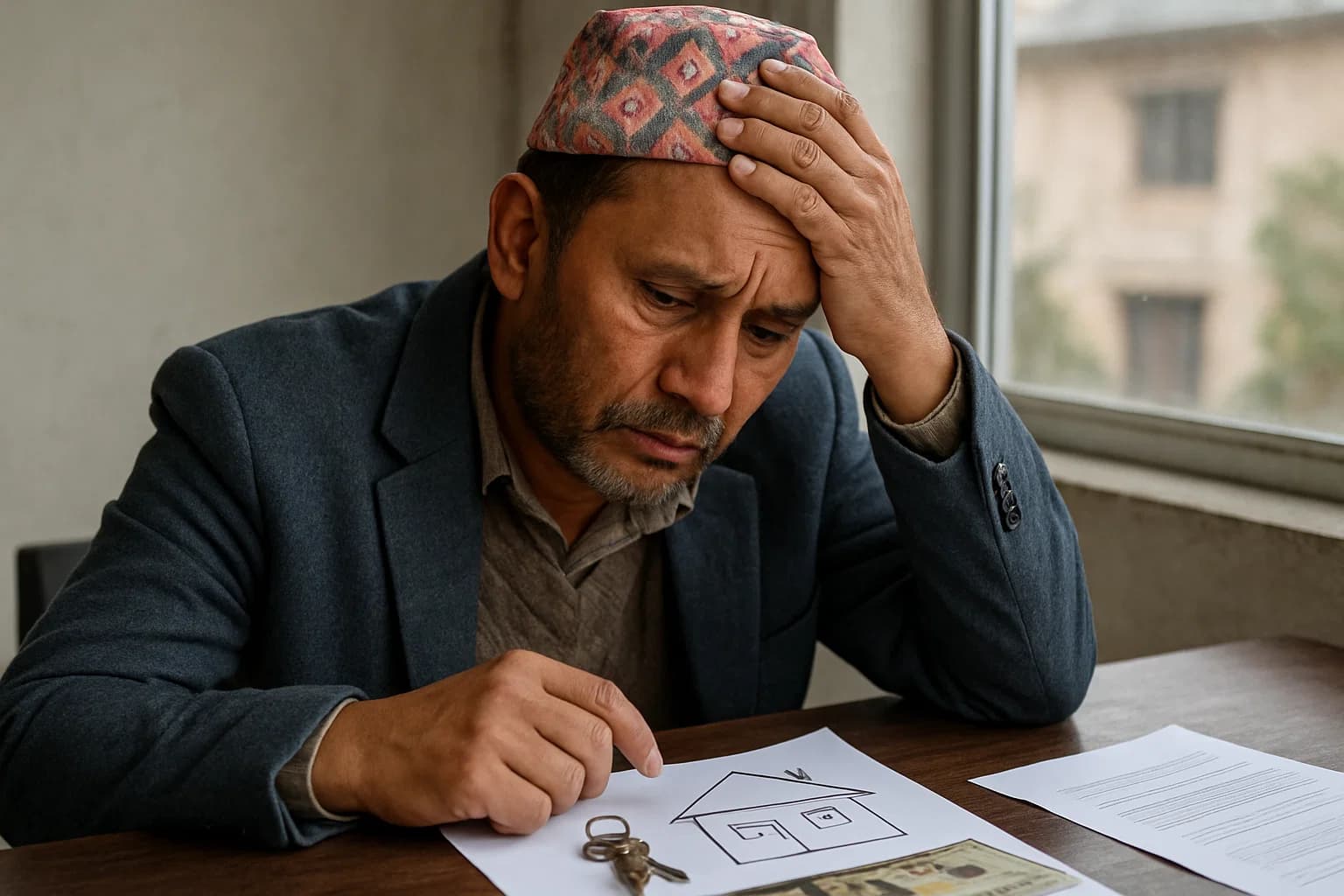
Nepal’s new real estate law makes ghar and land deals possible only through licensed agents. Will it clean up black money or push small brokers out?
Right now in Nepal, anyone can be a real estate broker. There’s no exam to pass, no license to apply for, no regulator breathing down your neck. If you can match a buyer with a seller, you’re in business. And it’s not small business either, we’re talking about transactions worth crores of rupees changing hands almost casually, often with little to no paperwork.
For many families, their ghar jagga are everything. A 'ghar' isn’t just four walls, it’s savings, retirement, and social status. It’s their savings account, their retirement plan, their badge of social status. But it’s also one of the easiest places to stash black money or quietly flip it for more. Deals get done in whispers, maps get “adjusted,” values get declared differently at the tax office, and a lot of the time, stacks of cash move under the table. Everyone knows this. Everyone laughs about it. And yet, for decades, the state has turned a blind eye.
And of course, we all know that one uncle who makes ungodly amounts off these kinds of deals. No one really knows how much he earns, probably not even him, because most of it never sees a bank account. Everything is in cash, off the record, and definitely outside the reach of the taxman.
That era is about to get a shake-up as the government finally decided to step in. On the Ministry of Land Management’s proposal, the Council of Ministers approved the Eighth Amendment to the Land Revenue Rules 2036, which makes one thing clear: if you want to do real estate business in Nepal, you now need a license. Whether you’re that uncle brokering deals in the neighborhood or a big developer launching housing projects, the same rule applies.
Now, the big question is, will this actually clean up the mess? Or will it just create new headaches for small brokers while the big fish thrive? That’s what we’ll dive into in this article: the law itself, the eye-watering fees, and the real impact this could have on Nepal’s shadowy real estate market.
Legal Basis and Amendment Details
This amendment is the backbone of the entire licensing regime. It introduces a brand-new Chapter 6(b), which for the first time makes licensing mandatory for anyone involved in real estate transactions. And it’s not just a vague guideline. The chapter lays out everything in black and white: how to apply, what documents you need to provide, how much you need to pay, when you must renew, and what compliance obligations you’re bound by once licensed.
In other words, what used to be an informal handshake business now comes with government paperwork, deadlines, and fees, lots of fees.
The Role of the Government
Naturally, someone has to run this licensing machine, and the job has landed on the Ministry of Land Management, Cooperatives and Poverty Alleviation (MoLMCPA). Through a Gazette notification, the Ministry has designated the Department of Land Management as the authority that will actually issue licenses and oversee compliance.
The law is explicit. Rules 23 (Sub-rule 10) of the amended Regulations says no one, whether a natural person (an individual broker) or a legal person (a company, firm, or institutions), can conduct real estate transactions without first securing a license. For the thousands of brokers, developers, and middlemen who have been operating freely for decades, this is nothing short of a legal earthquake obtaining a license.
The Official Motive Behind This Change
The government’s official narrative sounds noble enough. Licensing, it says, is meant to “professionalize and dignify” the real estate sector. And on the surface, who can argue with that? Real estate does need a facelift. But if you scratch beneath the language, the real objective becomes clear.
This reform is about control. It’s about dragging a cash-heavy, loophole-ridden ghar jagga market into the formal economy, where every transaction leaves a trail, every payment can be traced, and every broker has to answer to a regulator. The state wants to stop the flow of black money, expand its tax base, and finally bring order to a market that has thrived on opacity.
So, that’s the foundation: the law has changed, the Ministry has taken charge, and the rules are clear: no license, no business. Now let’s get into the details of the licence itself.
What It Takes to Legally Sell or Buy a Ghar Jagga in Nepal
Now that the law is on paper, the real question is, what does it actually take to get this license? Because this isn’t a matter of filling out a quick form at your local ward office. The government has made it clear that real estate is no longer a side hustle; it’s to be treated like a fully fledged business. And with that comes paperwork, fees, and a level of formality that will feel alien to many who’ve been operating informally for years.
1. Who Needs to Get Licensed
Whether you’re an individual broker who spends your days connecting buyers and sellers or an institution or company or firms putting together multi-crore housing projects, you fall under the same licensing regime. The state isn’t distinguishing between the small neighborhood hustler and the big developer; if you want to touch real estate transactions, you need a license.
2. The Paperwork
The application isn’t just a “name and signature” process. Under Schedule-8 of the amended Land Revenue Regulations, 2036 the state wants to see proof that you are running a serious business. That means registration certificates, tax clearance papers, PAN details, and even an audit trail for firms. On top of that, applicants must submit a business plan and board decisions, plus contact information like a website or email.
For someone used to cash deals and phone calls, this is a whole new world. It’s no longer enough to know who’s buying and who’s selling, you now need to prove to the government that you exist on paper, that you’ve paid your taxes, and that you have a plan for the business you’re running.
3. The Cost of Entry
Then comes the real hurdle: the license fee. The government has drawn a hard line based on the size of the transactions you deal with at once. If your deals are up to 5 crore rupees, you’re looking at a license fee of Rs. 5 lakh. If they’re smaller or bigger, the fee jumps to 10 lakhs. And remember, this a one-time, upfront payment just to get through the door.
4. Deposits and Guarantees
On top of that, there’s a security requirement. Individuals must put down a Rs. 50,000 cash deposit or bank guarantee, while institutions or licensed holders have to provide a Rs. 200,000 cash deposit or bank guarantee. On paper, this is meant to keep businesses accountable, but for smaller brokers, it’s just another financial burden stacked on top of the hefty licensing fee.
So in short, to become a “legal” real estate broker or developer in Nepal, you’re looking at mountains of paperwork and hundreds of thousands of rupees upfront. For some, this will be manageable. For many, it will feel impossible. And this is where the debate really begins, because getting the license is only step one.
What happens after you have it, how often you have to renew, and how much more you’ll have to pay is where the story gets even more complicated.
Renewal Rules: Deadlines, Fees, and Penalties
Real estate licenses in Nepal now come with an expiry date, and staying in business means staying on top of deadlines, paperwork, and more payments to the government.
1. Renewal Deadlines
Every license has to be renewed, and the application must be filed at least thirty-five days before it expires. The idea, according to the law, is to give the Department of Land Management enough time to check your details and decide if you still qualify. But for brokers and companies, this is yet another countdown clock to keep track of; miss it, and you risk slipping into non-compliance.
2. Renewal Fees
And the costs don’t get any lighter. If your license covers one time transactions up to 5 crore rupees , you’ll need to pay Rs. 400,000 every five years to renew. If your deals exceed that threshold, the fee doubles toRs. 800,000. In other words, even after coughing up 5-10 lakh just to get started, you’ll need to set aside a hefty amount every five years just to stay licensed. For many small players, this yearly renewal will feel less like maintenance and more like a chokehold.
3. Renewal Documents
Renewal isn’t just about paying money. You’ll also need to prove, once again, that your business is in good standing. That means providing updated company details, an audit report from the latest financial year, and a fresh tax clearance certificate. The message here is clear: you can’t just buy a license and go back to running things informally. You have to keep proving that you’re playing by the rules year after year.
4. Grace Periods and Penalties
Of course, not everyone is organized enough to meet a deadline thirty-five days early. The law does provide some leeway; a 90-day grace period to apply for renewal after expiry. But it comes with a price tag: an extra fifty thousand rupee penalty. And if you let that window close too, you’re back to square one, forced to reapply for a brand-new license with all the paperwork and fees that entails.
So, keeping a license isn’t cheap or simple. You pay big upfront, then pay again every 5 years, all while juggling audits, tax filings, and government paperwork. For larger firms with dedicated finance teams, this may be manageable. For the small-time ghar jagga brokers who have survived on phone calls and cash transactions, it’s a system that demands a complete overhaul of how they operate.
And this brings us to the next big question: what happens after you’ve got the license and renewed it; what are the rules you must follow in day-to-day business? That’s where the compliance obligations come in, and they are just as demanding.
What Do the New Rules Look Like?
Getting the license is one thing, but keeping it is another story. The government wants brokers and developers to actually change how they work, not just hang a certificate on the wall. Let’s look at some of those obligations.
1. Record Submission
From now on, every ghar jagga deal; whether a plot of land or a full house, must be reported to the Department of Land within three months of the fiscal year ending. No more backroom cash deals that disappear without a trace; the state wants a paper trail for everything.
2. Transparency Measures
You also need to make it clear you’re legit. That means putting your license where clients can see it, and being ready to show your books if an inspector shows up. For buyers, it’ll finally be easier to tell who’s licensed and who’s not.
3. Prohibited Practices
Those “usual tricks” everyone jokes about; fake maps, bumping up land prices on paper, hiding who actually owns the property, are now officially banned. Get caught doing it, and you could lose your license altogether.
4. Land Service Center Requirement
And maybe the biggest change: all deals now have to go through the Geo-Information System (GIS). You can either set up your own Land Service Center or use someone else’s, but the idea is simple; every deal leaves a digital record. No more pretending things never happened.
What Happens If You Try to Cut Corners?
So what happens if you don’t play by the rules? The new system comes with real consequences if you get caught cutting corners.
1. Revocation of License
The most obvious penalty is losing your license altogether. If you cook up fake documents, or break the compliance rules, the government can simply cancel your license. Once that happens, you’re legally out of the real estate business. And depending on the case, you might not just lose the license, you could also face legal trouble under other laws.
2. Inspections and Monitoring
The law also gives inspectors the right to show up and check your business at any time. If they ask for your transaction records or financial details, you’re expected to hand them over. The idea is to make sure people aren’t just hanging a license on the wall while secretly continuing the old cash-only, off-the-books way of doing deals.
3. Punishments and Fines
The regulations itself don’t spell out every possible fine or jail term, but that doesn’t mean you’re safe. Because this licensing system is tied into bigger laws like the Land Revenue Act and the Money Laundering Prevention Act, breaking the rules could land you in much deeper trouble. If you fail to report deals properly or deliberately fudge values, you’re not just risking your license, you could be looking at fines, investigations, or even criminal cases.
So there you have it. Licenses can be revoked, inspections can happen anytime, and violations can spill into more serious legal territory.
Why Small Brokers Are Panicking (and Big Developers Aren’t)
The new system might look neat in theory, but in practice, it’s raising plenty of eyebrows.
1. High Barriers to Entry
Half a million rupees upfront and four lakhs every five years to renew? For small brokers, that’s impossible. They’ll either quit or go underground.
2. Risk of Market Monopoly
Meanwhile, big firms can easily afford it. This risks turning the market into a playground for a few powerful players.
3. Continuation of Informal Deals
If brokers can’t afford licenses, ghar jagga deals won’t stop. They’ll simply continue off the books, just like always. The law could miss its own target.
4. Licence Resale and Loopholes
There’s also the danger of a new kind of market; one for the licenses themselves. People might start “renting” or reselling licenses rather than using them directly. We’ve seen shades of this before. Remember how some educational consultancies tried to beat licensing costs? They wanted to team up under one registered entity, split the security deposit, but kept running their own operations independently. Real estate brokers could easily copy that playbook, defeating the whole point of regulation.
4. Administrative Burden
Even for those who can afford to get licensed, the compliance part could be its own nightmare. Submitting records on time, running or accessing a land service center, and working through the GIS system all sound progressive. But if the government’s tech systems crash or paperwork piles up; as often happens, the “modern” process could feel like just another round of red tape.
So yes, the law might clean up the sector on paper. But without balance, it could just as easily push small players out, strengthen monopolies, and leave the informal economy untouched.
India vs. Nepal: Same Idea, Different Outcomes
India’s RERA Framework
India’s Real Estate (Regulation and Development) Act of 2016 shows what happens when regulation actually works. RERA has restored buyer confidence, resolving over 1.5 lakh consumer complaints by mid-2025. Developers are now required to put everything online; layout plans, approvals, construction status, delivery timelines before they can even advertise. For buyers, that’s been a game-changer.
The money followed. Private equity inflows jumped to $26 billion between 2017–2020, compared to $17.5 billion in the five years before. And for developers who didn’t play by the rules, the penalties were real: fines up to 10% of project cost for non-registration, 5% for non-compliance, and cases where groups had to return Rs 178 crore to homebuyers. Add to that the 70% escrow rule, which locks most of the money into the project it was raised for, and completion rates have improved dramatically.
Nepal’s Approach
Nepal has borrowed the idea but left out the best parts. Instead of moderate, accessible fees and consumer protections like India’s, Nepal has slapped on flat charges of Rs 5–10 lakh upfront and Rs 4–8 lakh every five years. That’s huge in our context, where transaction volumes and incomes are far smaller.
It looks less like a push for transparency and more like revenue collection. There are no online disclosure platforms, no escrow rules, no real consumer safeguards. Small brokers risk being priced out, big players won’t blink at the fees, and ordinary buyers may still be left in the dark, exactly the opposite of what RERA achieved in India.
Final Thoughts
At one level, this law feels like something Nepal should have done years ago. Forcing brokers and developers to get licensed, submit records, and go digital is, in theory, a big step toward cleaning things up.
But the way it’s been designed, it feels less like reform and more like revenue collection. The fees are sky-high for Nepal’s context, and instead of formalizing the ghar jagga sector, it might just push small players further underground while the big developers carry on comfortably. It risks shrinking the formal market rather than growing it.
If the government really wants this to work, it has to make the process transparent, cut down the bureaucracy, and set fees that don’t crush smaller brokers. Otherwise, we’ll end up with the same old story: a rule that looks tough on paper, but in practice just drives people back to the shadows.
So yes, licensing could be a turning point, but only if it’s done with some balance. Without that, it’s just another flashy announcement that changes less than it promises.
Additional Resources
- Buying a Ghar? You Must Pay via Commercial Bank in Nepal
- Why NIBL Equity Partners Is Betting on Himalayan Java Coffee
- Embossed Number Plate: A Digital Dream or Just Another Headache?
Starting a business in Nepal?
Register your company online — name reservation, MOA/AOA, PAN/VAT and OCR filings, all in one place.



Related Blogs

Subscribe to our newsletter
Get latest news and updates directly to your email.