Top Tax Payers of Nepal Honoured By IRD
Khatapana
November 20, 2025 10 min read
 Reviewed by Kailash Panday, Chartered Accountant & Corporate Lawyer
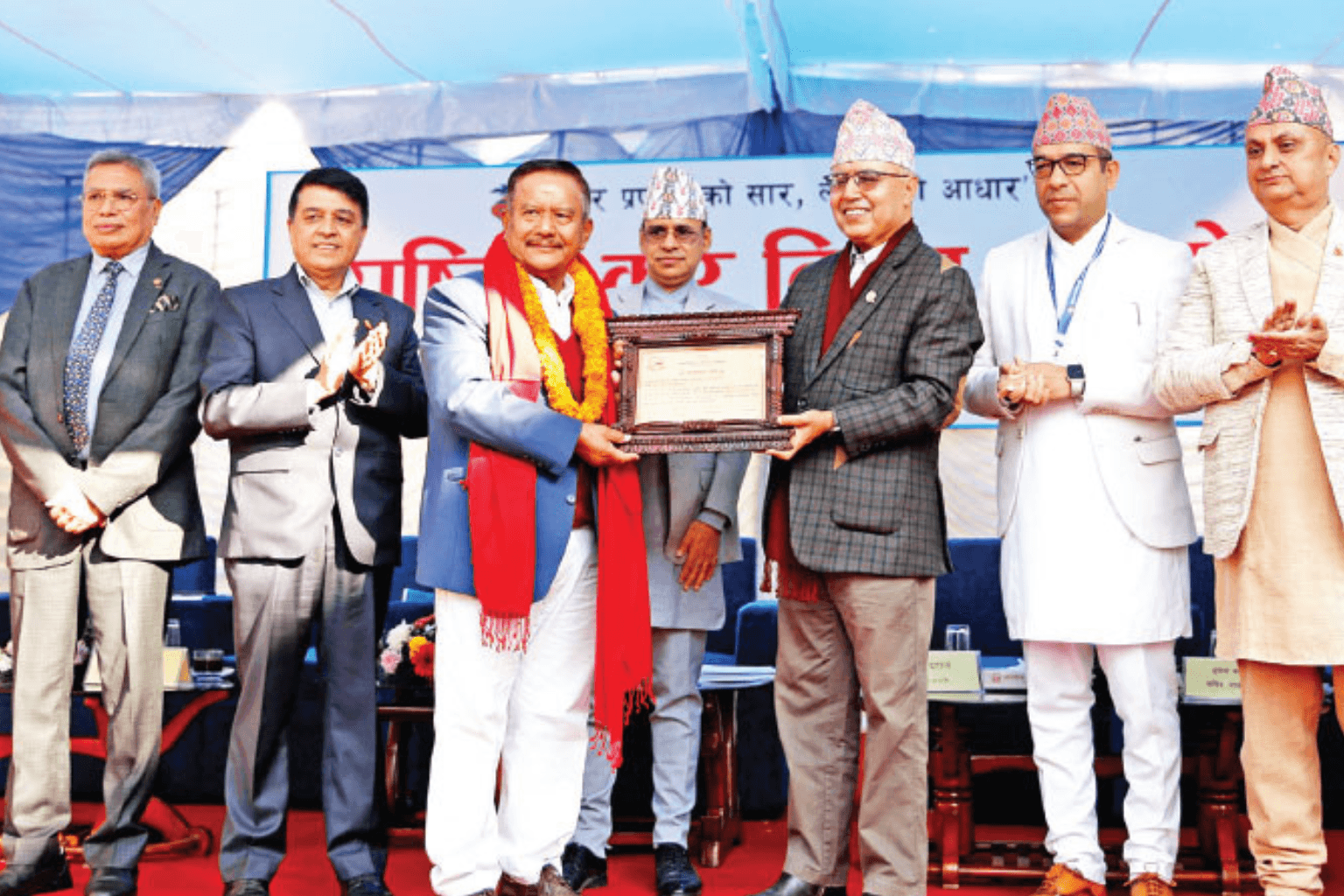
A breakdown of the Highest Tax Payers of 2080/81, category-wise winners, and what IRD’s list says about Nepal’s tax system and economic trends.
Every year on Mangsir 1, something predictable, yet surprisingly revealing, happens at the Inland Revenue Department in Lazimpat. Officials from the Ministry of Finance, IRD, private-sector associations, bankers, hoteliers, industrialists, and representatives from some of Nepal’s biggest companies gather in one room. The format never really changes: the government reviews the state of Nepal’s tax administration and honors the highest taxpayers across a set of predetermined categories.
This year followed the same script, with speeches from senior officials, commitments to better digital systems, reminders about predictable policies, and a push to make Nepal’s tax process easier for both citizens and businesses.
But let’s be honest: most people don’t tune in for the speeches.They want to know who actually made it to the highest taxpayers list this year.
Which business topped which category?
Which sectors are quietly driving Nepal’s tax base?
And why do some of Nepal’s biggest names, the ones everyone expects to see, not appear on this list at all?
This article breaks down the full taxpayer list, explains what each category represents, and offers insights into the broader tax landscape. By the end, you’ll have a clearer understanding of which sectors contribute the most, and what this signals for the future, especially at a time when conversations around the tax rate in Nepal and economic reform are becoming more important.
Before we get into the insights, let’s look at the the complete list exactly as recognized by IRD.
Full List of Top Taxpayers Honored in 2082
Below is the official list of the top taxpayers honored this year, presented category-wise:
S.N. | Category | Honored Taxpayer |
1 | Highest income tax payer among institutions | Nepal Telecommunications Authority |
2 | Highest income tax payer among sole proprietorship firms | Third Eye International |
3 | Highest income tax payer among exporters of goods | Dabur Nepal Pvt. Ltd. |
4 | Highest income tax payer among exporters of IT-related services | Verisk Nepal Pvt. Ltd. |
5 | Highest income tax payer among agriculture & livestock-related industries | Poshak Breeder Farm Pvt. Ltd. |
6 | Highest income tax payer among banks, financial institutions & insurance companies | Nepal Investment Mega Bank Ltd. |
7 | Highest income tax payer among health & educational institutions | Nobel Medical College Teaching Hospital Ltd. |
8 | Highest income tax payer among tourism businesses | Soaltee Hotel Limited |
9 | Highest income tax payer among goods-trading businesses (based on FY 2080/81 income) | Bhatbhateni Super Market & Departmental Store Pvt. Ltd. |
10 | Highest income tax payer among businesses with annual transactions above Rs. 50 crore and up to Rs. 100 crore | CDS & Clearing Ltd. |
11 | Highest income tax payer among energy-based industries | Bhotekoshi Power Company Pvt. Ltd.
|
12 | Highest income tax payer among remittance & money transfer businesses | IME Limited |
13 | Highest personal income taxpayer | Raj Bahadur Shah |
14 | Highest VAT contributor (Shrawan 2076 to Ashadh 2082) | Nepal Telecommunications Company Limited |
15 | Highest income tax payer among businesses with annual transactions up to Rs. 50 crore | V.F. Services (Mauritius) Pvt. Ltd. |
16 | Highest income tax payer among special industries | Unilever Nepal Limited |
A Closer Look at the Winners: Who They Are and What They Actually Do
Now that we’ve seen the full list, let’s break it down in plain language.
Here’s who these organizations are, how they operate, and why they ended up topping their categories.
1. Nepal Telecommunications Authority (NTA)
NTA topped the institutional category because regulators enjoy a revenue model that commercial operators simply cannot replicate. While Nepal Telecom and Ncell invest billions into towers, fiber, workforce, and competitive pricing, NTA imposes licensing fees, spectrum charges, and compliance penalties without any of the operational costs that normally eat into margins. This creates a situation where the regulator often generates higher net revenue than the companies it oversees. NTA’s category win illustrates how regulatory bodies in Nepal can become powerful revenue centers, even without selling a single product or service to the public.
2. Third Eye International
Because Third Eye International operates as a sole proprietorship, there isn’t much public information available about the business itself, and that’s normal. Sole proprietors don’t publish annual reports, don’t have mandatory disclosures, and rarely appear in the media. Yet they make up one of the largest segments of Nepal’s business ecosystem.
That’s exactly why this category is important.
Sole proprietorships handle everything from trading and services to niche professional work, and a significant portion of Nepal’s day-to-day economy runs through them. Many of these businesses operate quietly, without the visibility or scale of big private companies, but still generate substantial taxable income. By topping this year’s category, Third Eye International represents thousands of individuals who run lean, owner-driven operations.
It’s a reminder that strong tax contributions don't always come from large corporations. It also comes from single-owner businesses that stay disciplined, stay formal, and keep their finances clean enough to stand out in a crowded field.
3. Dabur Nepal Pvt. Ltd.
Dabur Nepal led the goods-export category because it operates at a level of industrial scale that very few Nepali exporters can match. Its Birgunj manufacturing base produces everything from fruit beverages to herbal care and exports them consistently across the region. In FY 2023/24 alone, Dabur accounted for over seven percent of Nepal’s total goods exports — a staggering figure for a single company. While other major manufacturers like CG Foods or cosmetic exporters face fluctuating demand and narrower supply chains, Dabur benefits from diversified products, strong regional distribution, and decades of operational discipline. Its category win is a classic example of how industrial formalization and export consistency outperform smaller, fast-moving competitors.
4. Verisk Nepal Pvt. Ltd.
Verisk Nepal’s dominance in IT service exports stems from its role as a captive delivery center for Verisk Analytics, a Fortune 500 company. Unlike independent IT firms such as Deerwalk, EB Pearls, or F1Soft, which must constantly pitch, negotiate, and retain international clients, Verisk operates with guaranteed long-term contracts and a stable flow of high-value projects. This business model insulates it from market volatility and allows it to focus entirely on technical quality and delivery timelines. Its category win reflects the growing advantage of global captive centers in Nepal’s IT landscape; businesses that combine predictable revenue with international-grade engineering talent.
5. Poshak Breeder Farm Pvt. Ltd.
Poshak Breeder Farm won the agriculture and livestock category simply because it operates at a level far beyond what most Nepali farms can achieve. With 80,000 breeding birds, weekly output of 200,000 chicks, and advanced incubation technology imported from the Netherlands, Poshak represents full industrialization in a sector still dominated by informal, small-scale backyard operations. Unlike its competitors, which often rely on manual processes and inconsistent documentation, Poshak functions like a modern manufacturing plant. This gap in scale and efficiency explains why it leads the category so decisively.
6. Nepal Investment Mega Bank Ltd.
In banking and insurance, Nepal Investment Mega Bank (NIMB) emerged ahead of large competitors like Nabil Bank and Global IME due to strategic consolidation. Following the merger of NIBL and Mega Bank, the new entity experienced a dramatic jump in profitability — over 64 percent in post-merger performance. The merger allowed the bank to streamline branches, integrate systems, and distribute overhead more efficiently across a larger customer base. While Global IME may hold more assets overall, NIMB’s synergy-driven profits gave it the tax advantage needed to top its category.
7. Nobel Medical College Teaching Hospital Ltd.
Nobel’s category win highlights a structural advantage rarely found elsewhere in Nepal’s healthcare sector: the dual revenue model of a teaching hospital. Nobel earns from both clinical services and large cohorts of medical, dental, and nursing students. With a 764-bed hospital and a wide range of accredited training programs, Nobel enjoys a stability that few standalone hospitals or educational institutes can achieve. Its ability to operate at full capacity year-round puts it ahead of competitors that rely solely on patient inflows or student admissions.
8. Soaltee Hotel Limited
Soaltee Hotel topped the tourism category because it operates with brand equity and institutional memory that newer hotels cannot replicate. With nearly six decades of history, Soaltee has long-standing relationships with corporate clients, government delegations, and international agencies. While Kathmandu’s luxury hotel market has become crowded with entrants like Marriott, Hyatt Place, and Aloft, Soaltee maintains steady occupancy through event hosting, conferences, and diplomatic engagements. Its long-established reputation provides a level of insulation against the market volatility that affects many of its newer competitors.
9. Bhatbhateni Super Market & Departmental Store Pvt. Ltd.
Bhatbhateni’s leadership in the goods-trading category is a direct result of scale, a form of competitive advantage that multiplies even when retail margins are thin. With 28 stores nationwide, 150,000 product lines, and daily sales exceeding Rs 5.5 crore, the company operates at volumes no other organized retailer in Nepal even approaches. Hundreds of smaller supermarkets and minimarts may collectively hold the market, but individually they lack the supply chain efficiency, inventory turnover, and purchasing power that makes Bhatbhateni so profitable. In a business where one or two percent margins are normal, scale is the difference between survival and category dominance.
What’s Everyone Really Earning in Nepal?
Compare salaries, read company reviews, and share your own anonymously. Because transparency isn’t taboo anymore.
🔍 Find Out Now10. CDS & Clearing Ltd.
CDS & Clearing leads its transaction-based category because it is the backbone of Nepal’s securities market, and its only central depository. Every share purchase, sale, demat request, and settlement cycle runs through CDS, regardless of whether the market is booming or crashing. Competitors don’t exist by design; all brokers, merchant bankers, and depository participants rely on CDS to process their transactions. This monopoly-like structure ensures revenue stability, making CDS the natural category winner year after year.
11. Bhotekoshi Power Company Pvt. Ltd.
Bhotekoshi Power Company topped the energy category because it has crossed the phase that determines profitability in hydropower: time. After more than twenty years of operation, the project has already paid off the bulk of its construction debt, leaving it free to generate clean, stable profits. Newer projects like Middle Bhotekoshi or Trishuli 3A are still in debt repayment phases and therefore struggle to show meaningful net income. Hydropower becomes profitable only when financing burdens fall, and Bhotekoshi is one of the few that has reached that stage.
12. IME Limited
IME’s category win in remittances is the result of network effects, a competitive edge that becomes increasingly difficult for others to challenge. With over 150,000 global payout points and thousands of domestic agents, IME has built the widest remittance distribution network in Nepal. Brands like Prabhu Remit or City Express operate effectively, but none offer the same geographical coverage or brand recall. “IME Garaun” has become shorthand for money transfer in Nepali households, reflecting how strong distribution and brand identity translate directly into taxable revenue.
13. Raj Bahadur Shah
Raj Bahadur Shah’s repeated recognition as Nepal’s highest personal taxpayer reflects an uncommon level of financial transparency in the context of Nepal’s family-owned conglomerates. As the Managing Director of Jawalakhel Group of Industries, he oversees dominant beverage brands that generate significant profits. Unlike many business families who disperse income across multiple subsidiaries or minimize distributions, Shah maintains a structured income profile with clear dividend flows. His consistent appearance at the top of the personal taxpayer list highlights both JGI’s profitability and his formal approach to income reporting.
14. Nepal Telecommunications Company Limited (NTC)
NTC topped the VAT category because VAT is a function of transaction volume, not profitability. With around 20 million subscribers and a wide range of telecom products, NTC processes more taxable transactions than any other telecom service provider in Nepal. Competitors like Ncell, despite strong revenues, simply do not match the subscriber base or service spread. Every data pack, recharge, and voice service triggers VAT collection, which makes NTC’s category win a direct reflection of scale rather than margins.
15. V.F. Services (Mauritius) Pvt. Ltd.
V.F. Services (Mauritius) Pvt. Ltd., better recognized globally as VFS Global, topped the category for businesses with annual transactions up to Rs 50 crore. VFS operates as the authorized outsourced visa application processing partner for various embassies, including the Embassy of Georgia in Nepal. Its role is strictly facilitative: scheduling appointments, accepting applications and fees, collecting biometrics, forwarding documents to the respective embassy, and returning processed passports to applicants.
Importantly, VFS Global does not make visa decisions. Approval or rejection rests entirely with the embassy, and VFS explicitly disclaims any responsibility for delays, additional documentation requests, or the outcome of the application itself. This limited but essential scope, focused solely on front-end processing, allows VFS to run a lean, efficient operation with predictable demand driven by the high volume of Nepalis applying for work, study, and travel visas each year.
Because the service is standardized, fee-based, and tied to steady visa flows, VFS benefits from consistent revenue without the heavy infrastructure or operational burdens common in other industries. This combination of stable demand, lean operations, and clear contractual roles explains how VFS secured the top spot in its turnover category, even while remaining relatively low-profile in Nepal’s broader business landscape.
16. Unilever Nepal Limited
Unilever Nepal dominates the “special industries” category because FMCG is one of the few sectors in Nepal that enjoys year-round demand across every demographic. From Sunsilk to Close-Up to Wheel, Unilever brands occupy eight out of ten Nepali households. Competitors like Pashupati, Premier, and Patanjali serve important market segments, but none match Unilever’s distribution depth or brand penetration. Its consistent performance, including steady dividends for shareholders, reflects how essential-goods manufacturing remains one of the most resilient industries in Nepal, regardless of the broader economic climate or changes in the tax rate in Nepal.
Tired of Tax Deadlines? Let Us Handle Them.
Whether you’re a startup or a growing firm, Khatapana takes care of your monthly filings, bookkeeping, and IRD compliance — accurately and on time.
File My Taxes Before It’s LateHow Category-Based Recognition Actually Works
One thing that often gets misunderstood about National Tax Day is the idea that this list represents Nepal’s biggest taxpayers overall. It doesn’t. And it’s not meant to.
The government follows a category-based recognition system, which means it starts by deciding which economic categories it wants to highlight in a given year. Only after those categories are locked in does IRD look at taxpayers within each category and select the top performer.
In simple terms: it’s 16 different races, each with one winner, not one race with 16 winners.
This matters for a few reasons.
First, the categories change over time. One year may emphasize exporters and special industries, another year may highlight digital services, micro-enterprises, or VAT compliance. So if a major business isn’t visible in this year’s list, it may simply be because its sector wasn’t included.
Second, companies pay different types of taxes such as corporate income tax, VAT, excise duty, TDS, and more. A business might be one of Nepal’s biggest VAT contributors but not appear in the income tax category, or vice versa. A telecom operator with massive indirect tax payments won’t show up in the list unless its category is selected.
And finally, this system encourages a broader picture of Nepal’s tax base. Instead of rewarding only the largest players, IRD recognizes leaders across sectors that often get overlooked like agriculture, mid-sized companies, sole proprietorships, energy, tourism, IT services, and more.
And if you’re wondering why big names like CG, Surya and other business giants are not on the list, it’s because these groups don’t compete as a single entity. Their operations are spread across dozens of subsidiaries, each with its own financials. Even if the group, as a whole, generates huge tax revenue, no single subsidiary may top its category.
Understanding this helps clear up common misconceptions. The “highest taxpayer list” isn’t a leaderboard of Nepal’s richest companies or individuals, it’s a sector-wise snapshot of who performed best within the categories that the government chose to recognize this year.
Nepal Government Startup Loan Eligibility & Scoring Tool
Check Your Eligibility & Score for the Startup Loan in Nepal (IEDI)
See where you stand. Get guidance to strengthen your appFinal Thoughts
Taken together, this year’s National Tax Day recognition gives a clearer picture of how Nepal’s economy actually works when you strip away assumptions and look at sector-by-sector performance.
The winners aren’t just the “biggest businesses.” They’re the ones that operated formally, scaled sustainably, kept their books clean, and generated enough taxable profit to top their categories. The list highlights the parts of the economy where structure, compliance, and scale translate directly into revenue, such as telecom regulation, FMCG manufacturing, retail chains, banking, and teaching hospitals.
It also shows where Nepal is still evolving. Agriculture, for example, produces enormous output but shows up only when operations become industrialized, like Poshak Breeder Farm. IT exports appear only when companies are plugged into global value chains with predictable contracts. Hydropower becomes profitable only after long debt cycles. Remittances continue to fuel service businesses more than domestic manufacturing. And in many sectors, informal players remain too fragmented to compete with organized firms when it comes to tax contribution.
The category-based system matters too. Some names don’t appear simply because their sectors weren’t recognized this year. Others operate through multiple subsidiaries, diluting their visibility. And indirect taxes like VAT often tell a completely different story from corporate income tax, which is why understanding Nepal’s tax structure is just as important as looking at who topped the lists.
At a time when conversations around the tax rate in Nepal, economic predictability, and digital reforms are gaining momentum, this list is a reminder that tax contribution is ultimately a reflection of business fundamentals: scale, transparency, and the ability to grow within a formal system.
If Nepal wants more sectors to show up in these lists, and more businesses to operate at this level, the path forward is clear: better service delivery, simpler compliance, smarter digital systems, and policies that make formalization worth it.
National Tax Day is symbolic, but it also sends a practical message. When businesses grow, operate transparently, and stay within the formal tax net, everyone benefits; the economy, the government, and taxpayers themselves.
Starting a business in Nepal?
Register your company online — name reservation, MOA/AOA, PAN/VAT and OCR filings, all in one place.


Related Blogs

Subscribe to our newsletter
Get latest news and updates directly to your email.