Who Really Qualifies for the IEDI Startup Loan in Nepal?
Khatapana
November 18, 2025 10 min read
 Reviewed by Kailash Panday, Chartered Accountant & Corporate Lawyer
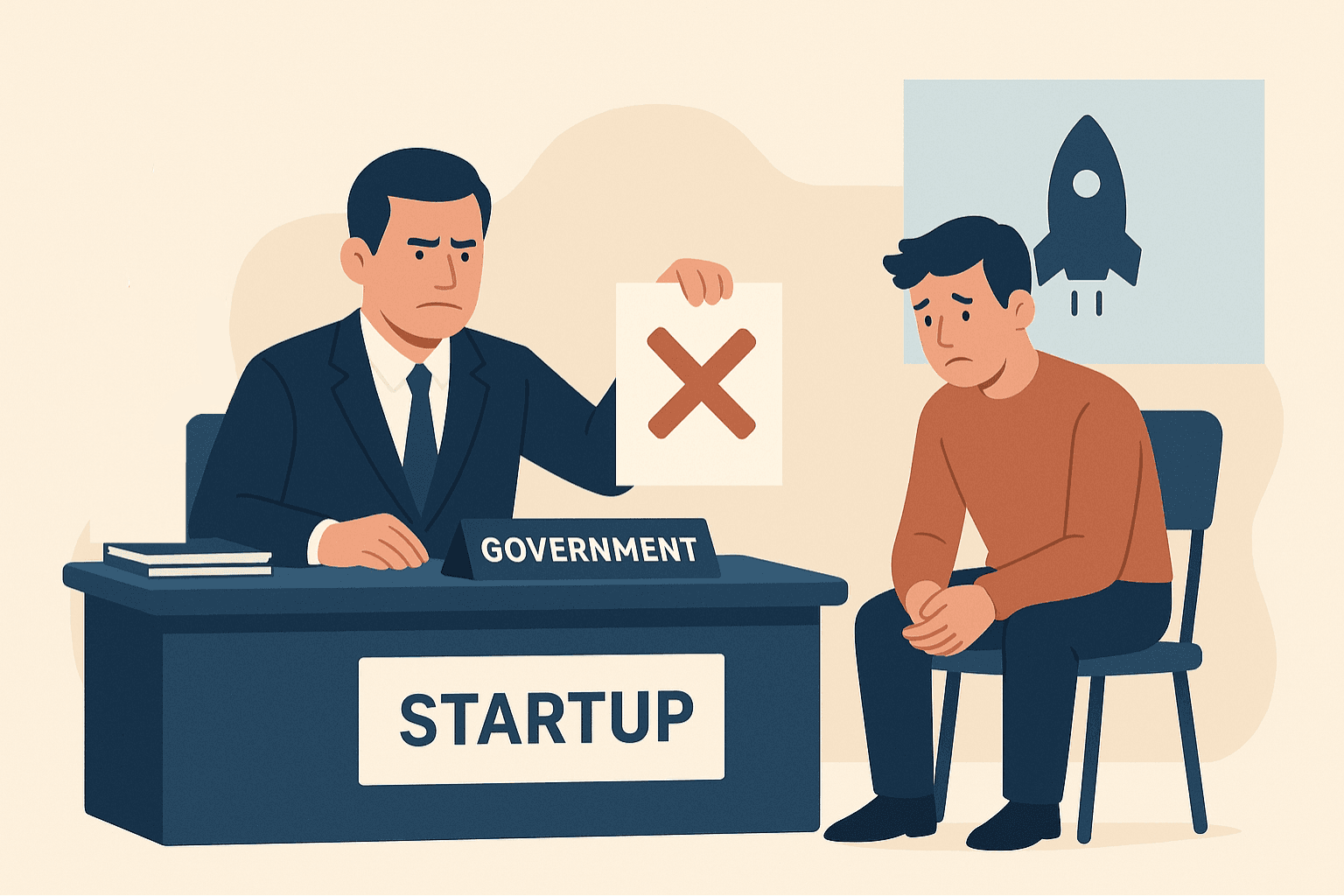
A Clear Guide to the Basic Eligibility Criteria of Startup Loan in Nepal
If you’ve spent even ten minutes scrolling through Nepali entrepreneurship groups, you’ve probably seen the same excitement:
“20 lakhs, 3% interest, no collateral. I’m definitely applying!”
“My cousin’s poultry farm should get this easily.”
“I just registered my company yesterday. Am I in?”
And then, IEDI goes ahead and rejects most applications. Just last year, only around 600 startups among 5,158 applicants were able to secure this loan. That's an 88% rejection rate we’re looking at. But why?
Well, it's not because the founders aren't talented, and not even because the ideas are bad.
It’s simply because people don’t understand who this loan was actually designed for, and whether they should even bother applying.
So let’s break it down. Simple and clear.
This is your complete guide to understanding the basic eligibility criteria for the startup loan in Nepal, based entirely on the official Startup Enterprise Loan Operation Procedure 2082.
But let’s start with a general overview of this loan and how it works.
Why This Loan Exists (And Why It’s Not for Everyone)
Before diving into eligibility, let’s rewind a bit. Because this isn’t just another government scheme where you show up, fill out a form, and hope someone in an office blesses you with money.
The startup loan in Nepal was born out of something very specific: the government finally realized that Nepal has thousands of young founders sitting on ideas that could actually change industries, if someone just gave them a push.
And not just any ideas. They’re looking for Ideas backed by technology, innovation, creativity, and the ability to grow. The Preamble of the Procedure spells out clearly that this loan exists to turn Nepal’s growing use of technology and creative thinking into real, commercial, problem-solving enterprises.
In simple words:
This fund was not built for businesses that are just “running.”
It was built for businesses that are building something new.
If your business has been doing the exact same thing for the last 12 years, the system isn’t targeting you.
If you’re simply opening another shop because someone else’s shop is doing well, again, not the target.
And if your “innovation” is just repainting an old idea, the Committee will see right through it.
This loan is meant for founders who are trying to push Nepal forward, not just keep up with yesterday.
Now that the intention is clear, let’s slowly peel the layers and understand whether you fall into the group this loan was truly designed for.
Let’s move deeper.
First Question: Does Your Sector Even Qualify?
Before you think about documents, presentations, scoring, or anything else, there’s a brutally simple filter you need to pass.
IEDI doesn’t hand out the startup loan in Nepal to just any business that shows up with enthusiasm and a registration certificate.
They have a fixed list of sectors, almost like “approved buckets” that determine whether you’re even allowed to enter the competition.
Here’s what the government is willing to fund:
✔ Agriculture, Livestock, Forestry & Productive Sectors
Not your average nursery or farm, but ones that apply better techniques, tools, or smarter processes.
✔ Information Technology & Digital Services
Apps, platforms, SaaS, automation tools, digital solutions, the usual suspects for innovation.
✔ Transport, Logistics & Select Infrastructure Activities
Anything that makes movement, systems, or delivery smarter, safer, or more efficient.
✔ Education, Health, Tourism, Entertainment & Social Services
Yes, a school or clinic qualifies, but again, only if there’s some element of innovation or tech adoption.
✔ Traditional Crafts, Rural Technologies & Local Resource-Based Businesses
Your grandmother’s craft revived with modern design, or a local product turned into a scalable business.
These sectors exist for a reason.
The government isn’t trying to fund everything under the sun, they’re trying to fund the parts of the economy that can actually grow, create jobs, and push Nepal forward.
Now that the sector filter is clear, the next question becomes even more important: Does your business itself qualify as a “startup” under the law?
Let’s dive into that next.
The Legal Definition of a Startup (It’s Stricter Than You Think)
When it comes to the startup loan in Nepal, it doesn’t matter what you call yourself.
Call yourself a startup, a venture, a disruptor, a revolution, the Committee doesn’t care.
The law has its own definition.
And it’s not a loose, flexible, “vibes-based” definition like we see on social media.
According to Section 2(j) of the official Startup Loan Work Procedure, a startup is a business that:
1. Develops or produces some kind of product or service, not just reselling something already available.
2. Uses innovative and creative ideas, not copy-paste “me too” versions of existing businesses.
3. And applies technology in its operation or delivery, not just a Facebook page or a QR code at the counter.
That’s it. Three criteria. But together, they filter out half the applicants instantly.
Nepal Government Startup Loan Eligibility & Scoring Tool
Check Your Eligibility & Score for the Startup Loan in Nepal (IEDI)
See where you stand. Get guidance to strengthen your appLet’s make this real with simple examples:
1. A plain bakery using the same oven for 20 years = ordinary business.
Nothing wrong with it, but not a startup. Not eligible.
2. A bakery using IoT ovens that track temperature, automated packaging systems, digital inventory alerts = startup.
Technology + innovation = exactly the kind of project this loan supports.
3. A poultry farm with no tech, no process change, just feeding chickens = ordinary.
No matter how passionate the founder is, still not a startup.
4. A poultry farm using climate-controlled sensors, automated feeders, digital health logs, and smart accounting = startup.
Yes, even agriculture can be innovative, and the law embraces that.
Notice something? Innovation here is not sci-fi. You don’t need AI robots greeting customers or drones flying over your farm.
Innovation just needs to be real, practical, and clearly improving how your product or service is created or delivered.
This is where many Nepali founders get it wrong. They assume that being “new” equals being a startup. But legally, being “new” means nothing unless you bring something better, smarter, or tech-enabled to the table.
Now that we know what a startup actually means under the law, we can move to the next crucial layer: the checklist that decides whether your business truly qualifies for the startup loan in Nepal.
The Core Eligibility Criteria (Section 4)
This is the heart of the matter. Most applicants fail here.
Let’s make it painfully clear: If even one of these is missing, you are not eligible for the startup loan in Nepal. No exceptions.
A. The “MUST HAVE” Requirements
1. Your business must be registered.
This seems obvious, but it’s the #1 area where people fail. A registered firm, partnership, company, or cooperative qualifies. A Facebook page, TikTok shop, or “I’m planning to register soon” does not.
No registration = no eligibility. Simple.
2. Your business must use some form of technology.
This does not mean you need AI, blockchain, drones, or anything fancy.
But there must be a demonstrable element of technology in your production process, your service delivery, your operations, or your value chain.
IEDI needs to see a clear tech connection. And before you even wonder, “Using QR code for payment” does not qualify.
3. Your idea must be innovative or creative in improving a product or service.
Innovation isn’t “I think I can do this better.” That’s confidence, not innovation.
Innovation is:
“This is the new or improved method I am using and here’s how it changes the process.”
If the innovation isn’t visible, practical, or testable, it doesn’t count.
4. Your business must be less than 10 years old.
Registered 11 years ago? Sorry, you’re too old. Even if you “feel” like a startup, the law doesn’t award points for feelings.
5. Your turnover must not have exceeded Rs 15 crore in any year.
This loan isn’t for businesses that are already big. The cap ensures the fund supports early-stage and mid-stage companies, not giants who no longer need concessional loans.
If your turnover crossed Rs 150 million in any fiscal year, even once, you’re out.
6. Your business must be a new venture.
Split-offs, mergers, or “I separated from my old company and made a new one”, are all disqualified.
The loan wants to support fresh ventures, not companies trying to repackage themselves.
7. You must submit ALL required documents.
The law requires:
- Registration & renewal certificates
- PAN + tax clearance
- Audited financials
- Citizenship of authorized representative
- Proof of innovation & technology
- Salary records of employees
Missing even one document is not a “small issue.”
IEDI doesn't say “come next week with the remaining papers.” An incomplete file will equal instant elimination.
If you passed all seven, congratulations. You’ve survived the hardest part of the startup loan in Nepal: the eligibility wall.
Now let’s talk about the landmines people step on without realizing it.
The “If Any of These Apply, You’re Out” List
1. Not registered under Nepal’s industry laws.
2. Just importing goods and reselling.
3. Blacklisted companies.
4. Registered after the loan notice date.
5. Holding or investment companies.
The import-resale point alone disqualifies thousands of applicants every year. And these disqualifiers might be brutal but they are necessary. They protect the fund from misuse and ensure it reaches founders who are genuinely building something new.
Now that the conditions are clear, we can move toward the next major filter, the documents that prove everything you just read.
The Document Gate: Where Many Eligible Founders Get Rejected
After passing the basic criteria, you still need to produce the full set of documents listed in Section 8.
Here’s the complete list:
- Registration and renewal certificate
- PAN and tax clearance
- Audited financial statements
- Citizenship of the authorized representative
- Proof of innovation or adopted technology
- Salary details of employees
Missing even one? IEDI won’t consider your proposal.
This entire section exists for one reason. IEDI wants to eliminate unserious applicants before the scoring stage begins.
And it works. Every year, dozens of otherwise eligible founders get rejected simply because their documentation isn’t complete or convincing.
If you’re applying for the startup loan in Nepal, this is the gate you absolutely cannot treat lightly.
Now that we’ve covered documents, let’s move to another landmine many people don’t know about: the submission rules that quietly disqualify thousands.
Proposal Submission Rules: The Hidden Deal-Breakers
Even if you're eligible and documents are perfect, you can still get rejected because of Section 9.
Rule 1: Only ONE application per household.
If you, your brother, and your sister all apply, only one will be accepted.
Rule 2: If you’ve already received a government concessional loan, you cannot apply.
Rule 3: You must self-declare honestly.
If your declaration is false, your proposal can be cancelled at ANY time, even after shortlisting.
These rules exist to avoid misuse and double benefits.
Who Actually Has the Highest Chances of Selection?
This is the part everyone cares about the most.
Because qualifying for the startup loan in Nepal is one thing, but getting selected is a completely different battle. IEDI doesn’t judge you based on passion, vibes, or your “entrepreneurial energy.” They judge you based on the scoring system inside Schedule 5 of the official startup loan operations procedure, which functions like a mathematical filter. Every strong point adds up. Every weak point drags you down. And there is no room for emotional appeals.
So the question is simple: Who actually ends up scoring the highest?
Let’s break it down.
1. Startups With an MVP or Prototype
If your idea is still sitting in a notebook, you start the race at a disadvantage. IEDI wants proof, something real, something testable. A prototype signals that you’re not just dreaming but building. It shows that you’ve taken the first real step, validated your concept, and reduced the program’s risk. An MVP immediately pushes you ahead of those who only have “plans” written on paper.
2. Startups Using Strong, Integrated Technology
This is where many founders misunderstand the requirement. Technology doesn’t simply mean having a website or accepting online payments. IEDI looks for businesses that use technology throughout their operations, whether that’s automated production processes, digital inventory, sensor-based monitoring, software-driven workflows, or integrated systems that make the business faster, smarter, and more efficient. The more deeply the technology is woven into your business, the higher you score.
3. Startups Using Mostly Domestic Raw Materials
This point seems small but plays a big role. IEDI gives more marks to businesses that rely on Nepal’s own resources rather than imported inputs. Domestic sourcing strengthens the local economy, reduces import dependency, and aligns perfectly with national industrial policy. If your business can run largely on Nepali raw materials, you enter a higher scoring bracket automatically.
4. Startups With a Clear, Thoughtful SWOT Analysis
SWOT isn’t a formality. It’s a transparency test. The committee can instantly tell if your SWOT is generic, copied, or written lazily. A good SWOT shows that you understand your strengths deeply, acknowledge your weaknesses honestly, recognize real opportunities, and have a practical sense of the challenges ahead. When your SWOT reflects actual thinking and not borrowed lines, you win points that others accidentally throw away.
5. Founders Who Present With Confidence and Clarity
The presentation round filters out the founders who “kind of” understand their business from those who truly live and breathe it. IEDI is not looking for flashy slides or TED Talk theatrics. They want someone who knows their numbers, understands their technology, can clearly explain their business model, and can logically defend the innovation behind the idea. A confident, clear presenter always scores better than a confused genius.
6. Startups With At Least 50% Self-Investment
This criterion may be the most underestimated of all. When the founders themselves have invested at least half of the project cost, it shows commitment. It tells IEDI that you’re not looking for a free ride, that you have skin in the game, and that you’re willing to take financial risks alongside the government. Strong self-investment instantly increases your scoring potential.
7. Startups That Create Jobs, Not Just Income
One of the core purposes of the loan program is to generate employment. If your business is designed to hire people, especially more than five or ten individuals, you stand out. A company that can only operate with one laptop and one founder will naturally score lower. IEDI wants ventures that help the country, not just the entrepreneur.
8. Sectors With Natural Scoring Advantages
Some sectors inherently align with the loan’s objectives because they naturally integrate innovation and technology. Areas like IT services, agriculture with modern techniques, education technology, waste management solutions, digital platforms, and health-tech models typically perform well in scoring because they fit the government’s broader mission: make Nepal more productive, more modern, and more self-reliant.
So Who Wins?
Startups with real prototypes, genuine innovation, domestic sourcing, strong documentation, clear thinking, and solid job-creation potential almost always rise to the top.
Meanwhile, founders who apply with vague ideas, imported raw materials, no prototype, and weak documentation rarely cross the minimum mark. And yes, the 50% score cutoff is a hard threshold. You don’t reach it, you don’t get considered. It’s that simple.
Understanding this scoring system doesn’t guarantee success, but it dramatically increases your chance of joining the shortlist for the startup loan in Nepal.
Nepal Government Startup Loan Eligibility & Scoring Tool
Check Your Eligibility & Score for the Startup Loan in Nepal (IEDI)
See where you stand. Get guidance to strengthen your appWhat Happens After You Apply (In Simple Story Form)
The official procedure describes a long process, but here’s the simple version:
- IEDI publishes a list of all applications.
- They filter out ineligible ones.
- They publish the presentation schedule.
- You present your proposal.
- They score you.
- Your file goes to the bank for credit appraisal.
- Scores are combined.
- Best-scoring applications get recommended.
- You meet the bank and sign the agreement.
- Loan gets disbursed in installments.
This entire journey is designed to test one thing: Is your project viable, innovative, and implementable?
Quick Self-Check: Should You Even Apply?
Here’s a blunt checklist.
If you can tick most of these confidently, apply.
✔ Registered business
✔ Within 10 years
✔ Not an import-resale operation
✔ Not blacklisted
✔ Not a holding/investment company
✔ Tech-enabled or adopting new technology
✔ Clear innovation
✔ Proper documentation ready
✔ At least some self-investment
✔ Ability to present your business clearly
If you score yourself:
- 8–10 points → You’re a strong applicant.
- 5–7 points → Possible, but work on weaknesses.
- 0–4 points → It’s better to prepare first and apply next year.
Final Thoughts: Clarity Before Confidence
Too many founders jump into the startup loan in Nepal just because the interest rate is attractive.
But this is not a casual loan, it’s not a lottery, and it’s definitely not meant for every business that wants “some funding.”
It’s meant for innovators, builders, tech adopters, people solving problems in smarter ways, and entrepreneurs who are actually doing something new
If your business fits that spirit, not only do you qualify, you actually have a chance of securing this loan.
And if you don’t fit yet, that’s okay. You now know exactly what to improve.
Related Articles:
Starting a business in Nepal?
Register your company online — name reservation, MOA/AOA, PAN/VAT and OCR filings, all in one place.


Related Blogs
Subscribe to our newsletter
Get latest news and updates directly to your email.