Nepal Rastra Bank Says the Economy Is Calm, But for How Long?
Khatapana
October 17, 2025 11 min read
 Reviewed by Kailash Panday, Chartered Accountant & Corporate Lawyer
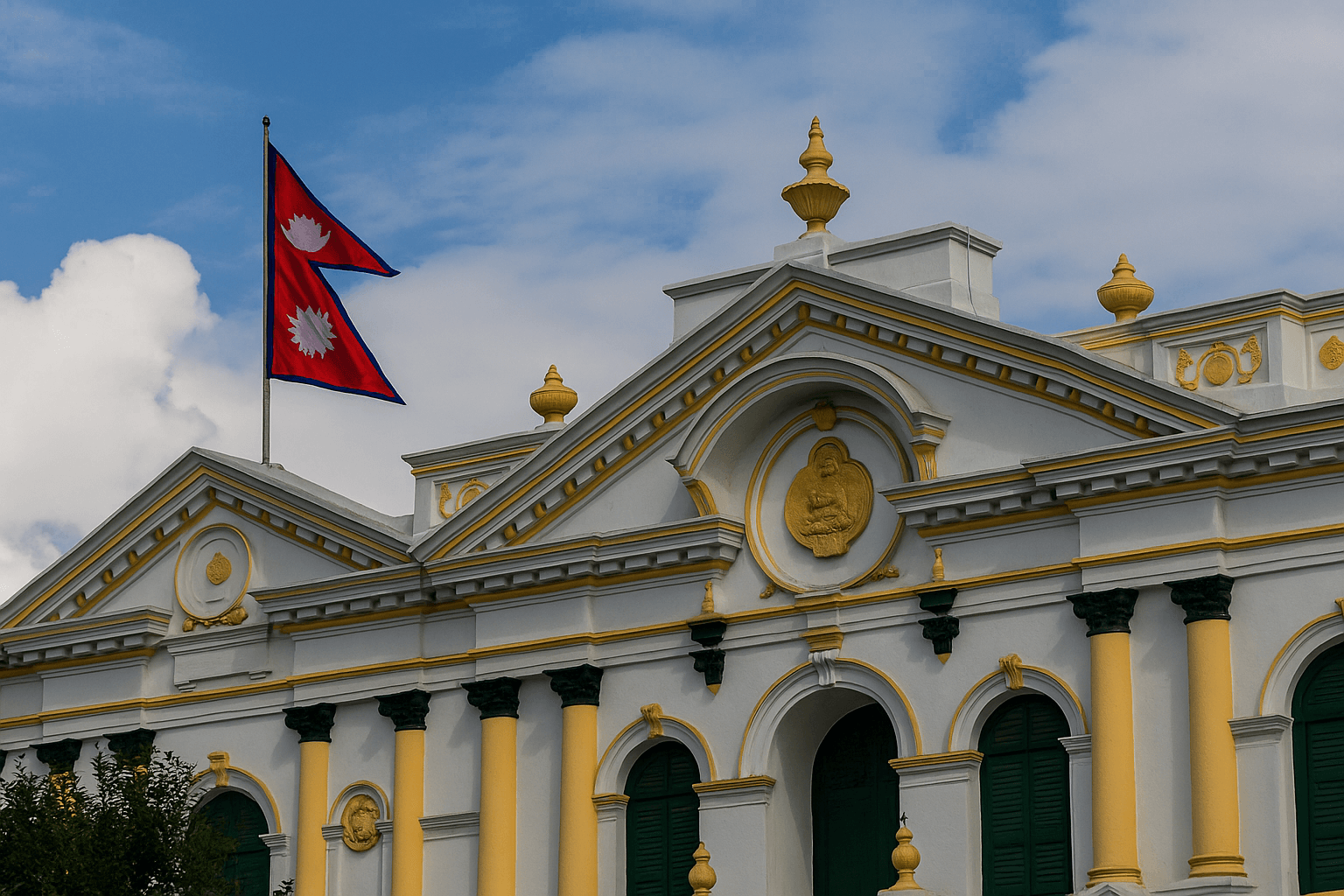
Nepal Rastra Bank recent report says Nepal’s economy is calm and stable. But with weak investment, job losses, and protest damage, how long can that ‘calm’ really last?
If you’ve been wondering how Nepal’s economy is holding up lately, the Nepal Rastra Bank has just released its big “health report”, officially titled the , covering the first two months of the current fiscal year (2082/83 BS). And the headline is: Things are surprisingly calm.
Prices aren’t rising much. The value of the Nepali rupee against the US dollar is stable. The country has enough foreign money saved up to pay for imports for the next 16 months. And the flow of remittance money from Nepalis working abroad has jumped by a whopping 33 percent.
In short, Nepal Rastra Bank says the patient; our economy, has a steady pulse. Inflation is down to 1.87 percent, which is less than half of what it was a year ago. Our foreign exchange reserves have reached Rs 2,881 billion, the highest ever recorded.
But if you look beyond the numbers, the story feels more complicated. The fever is gone, yes, but the energy hasn’t returned. Businesses aren’t investing much, young people are still leaving, and jobs at home aren’t growing fast enough. And then came the September 7 and 8 protests, which caused major damage to property and businesses in Kathmandu and beyond; an emotional and economic setback just as the country was starting to regain its footing.
So even though Nepal Rastra Bank’s report shows stability on paper, it doesn’t quite capture the uncertainty on the ground. The economy looks calm, but the calm feels fragile.
Which brings us to the next big question: if prices aren’t rising, is that actually a good thing? Let’s talk about inflation, and why “cheap” isn’t always cheerful.
Inflation: Prices Are Down, But That’s Not Always a Good Thing
When you hear that prices are falling, it sounds like good news, right? But as the Nepal Rastra Bank points out, sometimes “cheap” can actually mean “slow.” Let’s break it down.
Overall Inflation Has Fallen Sharply
In mid-September 2025, Nepal’s inflation was just 1.87 percent. A year ago, it was 3.86 percent. That’s a big drop, and it means prices are barely moving. On the surface, it looks like the cost of living is under control. But in reality, it might also mean people aren’t spending enough for prices to rise.
Food Prices: A Mixed Basket
Nepal Rastra Bank found that food prices actually fell by 1.34 percent. Here’s what that looked like on the ground:
- Vegetables were about 12.7 percent cheaper.
- Spices fell by 6.3 percent.
- Pulses and lentils dropped 3.6 percent.
- Only a few things, like cooking oil (+11 percent) and milk products & eggs (+2.7 percent), got more costly.
That sounds like a relief for shoppers, but for farmers and suppliers, falling prices can mean smaller profits and weaker motivation to produce more next season.
Non-Food Items: Still Creeping Up
While food got cheaper, non-food items kept getting pricier.
- Education costs jumped 7.7 percent,
- Clothing and footwear rose 6.3 percent, and
- Household goods went up 4.5 percent.
These are expenses families can’t easily avoid. So even if groceries cost less, other essentials are still squeezing household budgets.
Inflation by Region: The Differences Are Small
Inflation isn’t the same everywhere.
- Koshi Province saw the highest rise (2.99 percent).
- Sudurpashchim Province was the lowest (0.88 percent).
- Rural inflation was about 1.73 percent, while urban areas saw 1.91 percent.
For comparison, India, whose economy is closely tied to ours, had an inflation rate of 1.54 percent. That means Nepal’s overall price stability is pretty much in sync with its southern neighbor.
So, Should We Be Happy About Low Inflation?
Sort of, but not entirely.
Low inflation sounds great, but it can also signal that the economy is too quiet. When people stop buying as much (maybe because jobs are uncertain or incomes are stagnant), businesses stop raising prices. That’s exactly what Nepal Rastra Bank’s data hints at.
In simple terms: prices are calm not because everything’s booming, but because spending is slowing.
What’s Everyone Really Earning in Nepal?
Compare salaries, read company reviews, and share your own anonymously. Because transparency isn’t taboo anymore.
🔍 Find Out NowSo while cheaper vegetables feel nice, they also whisper a warning that our economy might be cooling a bit too much.
Nepal’s External Sector: The World Sends Us Money, But We Still Spend More Than We Earn
If the inflation story shows how calm things look inside Nepal, the external sector shows what’s happening between Nepal and the rest of the world, as in how much we sell, buy, and earn from abroad. Here’s what Nepal Rastra Bank found.
Exports: A Big Jump, But Not a Deep One
Exports shot up by 88.6 percent in just two months. But most of that growth came from a few items like soybean oil, palm oil, jute goods, cardamom, and noodles. (products we import, process a bit, and sell again.) That means factories are busy, but the value added inside Nepal is still limited.
Imports: Still Rising, But More Slowly
On the other hand, imports increased by 16.2 percent. We spent more on chemical fertilizers, vehicles, and telecom equipment, and less on things like readymade garments and oil seeds.
As a result, Nepal’s trade deficit, the gap between what we import and what we export, stood at Rs 257.8 billion. To make that simple: For every Rs 100 we spent on imports, we earned only about Rs 15 from exports.
That’s better than last year (when it was Rs 9 out of 100), but still a huge gap.
Services: More Money Going Out Than Coming In
The “services” part of trade includes tourism, education, and travel. Unfortunately, Nepal still spends more than it earns here.
We earned Rs 11.6 billion from foreign visitors, but we spent Rs 47.3 billion abroad, mostly on education (Rs 32.7 billion).
In simple terms, for every rupee Nepal earns from tourists, four rupees leave the country because Nepalis are studying or traveling overseas.
Remittances: The Real Hero of Nepal’s Economy
And then comes the number everyone waits for: remittance inflows.
According to Nepal Rastra Bank, Nepalis working abroad sent home Rs 352 billion in just two months, a massive 33 percent jump from last year. In US dollars, that’s about 2.5 billion.
During that same time, over 90,000 people got first-time approvals to work overseas, and another 45,000 renewed their contracts.
Remittances are the single biggest reason Nepal’s economy is stable right now. They bring in foreign currency, keep the Nepali rupee steady, and help households pay for food, education, and homes. They also explain why the current account (Nepal’s report card on foreign money) showed a surplus of Rs 130 billion this year.
The Bigger Picture: A Blessing and a Warning
It’s hard to overstate how much remittances matter. Without them, Nepal’s economy would look very different, and probably much worse.
But there’s another side to it: we’re stable today because Nepalis keep leaving. Every flight carrying migrant workers means more dollars next month, but fewer skilled people building the economy at home.
So yes, Nepal Rastra Bank’s report gives us plenty of good news. But it also reminds us of an uncomfortable truth: Nepal earns more from the hard work of its citizens abroad than from what it produces within its borders.
Balance of Payments and Reserves: Nepal’s Financial Cushion Looks Healthier Than Ever
Think of a country’s “balance of payments” as its overall wallet; everything that comes in (like remittances or exports) minus everything that goes out (like imports or overseas spending).
A Rare Surplus on Both Fronts
For the first two months of this fiscal year, Nepal Rastra Bank reported a current-account surplus of Rs 130.7 billion and an even larger balance-of-payments surplus of Rs 153.7 billion. That basically means Nepal earned more foreign money than it spent, a healthy sign after several years of deficits.
Record-High Foreign-Exchange Reserves
Our foreign-exchange reserves climbed to Rs 2,881 billion (about USD 20.4 billion). To put that in perspective, Nepal now has enough dollars and other foreign currencies to pay for 16 months of imports. This is the strongest cushion we’ve had in years.
The Catch: Less Investment, More Dependence
While the reserves are rising, foreign direct investment (FDI) coming into Nepal actually fell by half from Rs 2.71 billion last year to Rs 1.27 billion this year.
So what’s keeping the numbers up? Mostly remittances and a slowdown in imports.
In short: Nepal Rastra Bank’s data shows our external position looks strong on paper, but it’s built more on money sent by workers abroad than on new industries or investors coming in. It’s a stable house, but standing on thin stilts. One big global shock could easily shake it.
Fiscal Position: Spending More, But Not Where It Matters
The government’s wallet tells a different story. One of plenty of cash going out, but not necessarily to the right places.
Expenditure Is Up But Mostly on Running Costs
According to Nepal Rastra Bank, total government spending rose 31 percent in the first two months of the fiscal year, reaching Rs 180 billion.
But here’s the twist:
- Recurrent spending (things like salaries, allowances, and daily operations) jumped 38 percent.
- Capital spending (the money used to build roads, schools, or infrastructure) collapsed by 57 percent, down to only Rs 6.3 billion**.
That means the state is paying itself more than it’s building for the future.
Revenue Collection Isn’t Keeping Up
Government revenue fell 5.3 percent overall.
- Tax revenue rose slightly ( +3.6 percent ) to Rs 150 billion,
- But non-tax revenue like fees, dividends, and service charges, plunged 66 percent.
So while spending is racing ahead, income is stumbling. It’s like giving yourself a salary hike right when your paycheck shrinks.
The Usual Pattern
Every year the story sounds the same: plenty of money spent on running the government, but far too little on building the country. Provinces barely touch their capital budgets, and federal projects often stall mid-way.
As Nepal Rastra Bank’s numbers quietly reveal, fiscal policy still feels reactive rather than visionary. More about keeping the system running than transforming it.
Monetary Indicators: Banks Have Cash, Businesses Have Doubts
While the government struggles to spend wisely, the financial system looks calm but cautious. The Nepal Rastra Bank monitors this part closely. How much money flows through banks, how much people save or borrow, and what interest rates look like.
Money Supply and Credit: Liquidity Without Confidence
- The total supply of money in the economy (M2) inched up just 0.3 percent.
- Private-sector credit, the loans businesses take to grow, increased a mild 0.9 percent.
- Deposits in banks rose 0.5 percent, reaching around Rs 7.3 trillion.
So, banks have funds. The problem is, not enough people or firms want to borrow them.
Basically, there’s cash in the system, but not enough confidence. Businesses are hesitant to expand, and individuals aren’t eager to take new loans. As Nepal Rastra Bank hints, this isn’t about high interest rates, it’s about uncertainty and weak optimism.
Liquidity and Interest Rates: Easier Money, Little Movement
During these two months, Nepal Rastra Bank absorbed about Rs 6.8 trillion in liquidity (that’s how it keeps inflation in check) but also injected Rs 149 billion by purchasing U.S. dollars from the market.
Meanwhile, interest rates fell sharply:
- The average base rate of commercial banks dropped to 5.7 percent (from 7.5 percent a year ago).
- The average lending rate slipped to 7.6 percent.
Lower rates usually encourage people to borrow and invest, but that hasn’t really happened.
And that says a lot. The money is cheap and available, yet the enthusiasm to build, expand, or take risks is missing. Nepal Rastra Bank’s report subtly captures this mood. A financial system that’s stable, but not yet confident.
Financial Access and Stability: Everyone Has a Bank Account, But Not Everyone Uses It
If there’s one area where Nepal has made visible progress, it’s in financial access. According to the Nepal Rastra Bank, there are now 107 licensed banks and financial institutions (BFIs) operating across the country, including commercial banks, development banks, finance companies, and microfinance institutions. Together, they run 11,512 branches across Nepal.
Banking for (Almost) Everyone
The numbers sound impressive:
- Deposits: 60.4 million bank accounts
- Loans: 1.99 million loan accounts
That’s almost two deposit accounts for every Nepali adult. It shows how aggressively the banking network has expanded, even to remote areas, thanks to mobile banking, digital wallets, and microfinance programs.
Financial Health of Banks
From a stability point of view, banks still look strong. Nepal Rastra Bank reports that the capital adequacy ratio (CAR), basically how much buffer banks have to absorb losses, stands at 13.09 percent, which is comfortably above international norms.
However, non-performing loans (NPLs), the loans that people or businesses haven’t repaid on time, remain high at 5.09 percent.
So the system is safe, but not spotless. Some loans are turning sour, especially in small and medium businesses that have struggled since the slowdown.
Access vs. Participation
Having a bank account doesn’t automatically mean you’re part of the financial system. Many accounts remain inactive or have very small balances.
In other words, we’ve built the doors, but not everyone’s walking through them. Nepal Rastra Bank’s data shows progress in “inclusion,” but real financial empowerment, where people actively save, invest, or borrow to grow, is still a work in progress.
Digital Payments: How Phones Are Quietly Changing Nepal’s Money Habits
If you’ve used QR codes to pay for tea or recharged your phone using mobile banking, you’re already part of Nepal’s quiet digital revolution. And according to the Nepal Rastra Bank, that revolution is moving fast.
The Numbers Tell the Story
In just two months, digital payments hit jaw-dropping levels:
- Mobile banking transactions: Rs 468 billion (that’s almost half a trillion rupees!)
- QR code payments: Rs 101 billion, across more than 40 million transactions
That means millions of people are now choosing screens over cash. The once-familiar “Can I get change for Rs 500?” is slowly disappearing from daily life.
Beyond Convenience: The Bigger Impact
Digital payments make everyday life smoother, but they also bring something bigger, and that’s transparency. Every transaction leaves a trace, helping reduce cash misuse and tax evasion while making small businesses more visible to banks.
Still, Nepal Rastra Bank’s report hints at an uneven story. Most of this digital surge is concentrated in urban areas. Outside the cities, patchy internet, digital illiteracy, and limited trust in mobile apps still hold people back.
The Next Challenge: Building Trust, Not Just Apps
So the next frontier is more about trust and awareness. People need to feel safe using digital tools. That’s how Nepal can make sure this digital shift doesn’t stop at the city borders, but reaches every market stall and tea shop across the country.
Capital Market: A Calm Market, But Missing Depth
If the banking sector is about saving, the capital market is about investing. Buying shares, mutual funds, and helping businesses grow. The Nepal Rastra Bank report shows that the market looks stable, but not particularly exciting.
Modest Gains, Steady Numbers
The NEPSE index, which tracks share prices, stood at 2,672 points in mid-September 2025, slightly up from 2,581 a year ago. The total market capitalization (the combined value of all listed companies) rose to Rs 4,467 billion, which is roughly 73 percent of Nepal’s GDP.
That’s a big number, but it hides how concentrated the market really is.
Who Dominates the Market?
Out of 276 companies listed on the stock exchange, the majority are from the banking, finance, insurance, and hydropower sectors.
Nepal Rastra Bank’s data shows that banks and insurers alone make up over half (52.9 percent) of total market value, while hydropower companies account for about 15 percent.
That means industrial, tech, and service companies, the ones that could really diversify and modernize the market, are still largely missing.
New Issues and Public Participation
During the two-month period, securities worth Rs 17 billion were listed on NEPSE. Most of these were ordinary shares, bonus shares, right shares, and mutual funds. The Securities Board of Nepal also approved new public issues worth Rs 10.95 billion, mostly mutual funds and rights offerings.
This steady inflow keeps the market active, but not transformative.
The Bigger Picture: Plenty of Movement, Little Transformation
Nepal’s stock market is like a calm lake; stable on the surface, but not very deep. Until we see more companies from sectors like manufacturing, tourism, IT, or education joining the market, NEPSE will remain more of a liquidity playground than a true investment engine.
Nepal Rastra Bank’s numbers show confidence, yes, but also complacency. The market is moving, but not evolving.
Final Thoughts
If you read the Nepal Rastra Bank’s latest report, it’s easy to think things are finally looking up. Inflation is low, prices are steady, the rupee isn’t tumbling, and Nepal has piled up enough foreign currency reserves to pay for more than a year’s worth of imports. On top of that, Nepalis abroad have sent home 33 percent more remittance money than last year. On the surface, that sounds like a pretty good deal. A calm, steady economy.
But dig a little deeper, and you’ll see the calm hides some cracks. The government is spending more, yes, but mostly on salaries and daily operations and not on roads, hospitals, or industries that create jobs. Businesses aren’t borrowing, even though interest rates are lower than they’ve been in years. Exports are up, but much of that growth comes from re-exported goods, not new local production. And the biggest reason Nepal’s economy looks stable isn’t because it’s producing more, it’s because millions of Nepalis are working abroad and sending money back.
It’s stability, but not strength. The economy feels like it’s on autopilot. Coasting smoothly thanks to remittances, but not really flying under its own power. As long as money keeps flowing in from overseas, Nepal will stay afloat. But if that stream slows down, this quiet stability could vanish fast.
The Nepal Rastra Bank has done its part keeping inflation low, maintaining liquidity, and holding the currency steady. But real growth has to come from within. Through smarter government spending, better investment, and policies that give young people a reason to stay and build.
Right now, Nepal’s economy is steady, yes. But steady isn’t the same as strong. And calm waters, as they say, don’t take you very far.
Starting a business in Nepal?
Register your company online — name reservation, MOA/AOA, PAN/VAT and OCR filings, all in one place.



Related Blogs

Subscribe to our newsletter
Get latest news and updates directly to your email.