Understanding Sandwiched Leave Application Policy in Nepal
My Salary Slip
March 14, 2025 6 min read
 Reviewed by Kailash Panday, Chartered Accountant & Corporate Lawyer
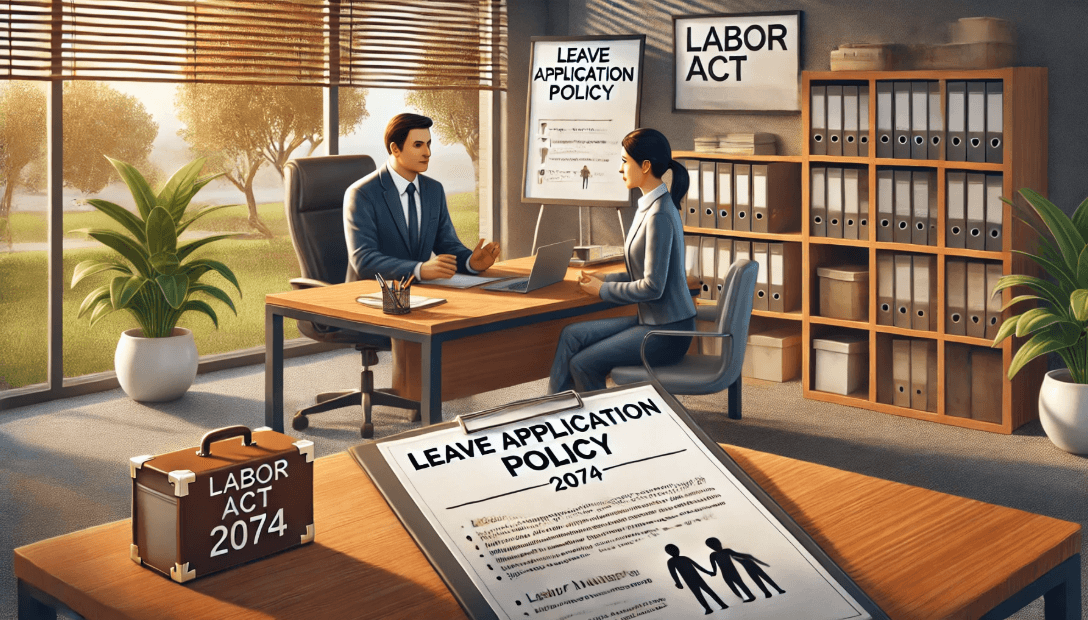
Suman, a mid-level finance officer, who had just joined a private company in Kathmandu, needed a short break to attend a family function. He submitted a leave application for Friday and Sunday, assuming his usual weekly holiday on Saturday wouldn't be counted as a leave day.
However, when his salary slip arrived at the end of the month, he was surprised to see three leave days deducted, not two. His HR manager explained that the company followed a sandwiched leave policy, where the holiday between two leave days is also counted as leave.
Suman, unaware of this policy, felt frustrated and misinformed. His confusion led to dissatisfaction, and he began questioning the transparency and fairness of the company’s HR policies. This incident not only impacted his morale but also triggered similar concerns among his colleagues.
Scenarios like Suman’s are more common than most employers realize, especially in Nepal, where HR policy awareness is still limited, and many employees learn the rules only when a deduction appears in their paycheck.
That’s why understanding the sandwiched leave application policy in Nepal is essential, not just for HR professionals but for employees and business leaders as well. Miscommunication or lack of clarity on such policies can lead to employee dissatisfaction, trust issues, and even attrition.
In this guide, we’ll break down:
- What a sandwiched leave policy really means
- How it is (or isn’t) governed by Nepal’s Labor Act 2074
- Practical implications in both public and private workplaces
- The impact of such policies on startup culture and employee retention
- How to write a proper leave application under different circumstances
By the end of this article, you'll have a comprehensive understanding of how sandwiched leave policies work in Nepal, and how both employers and employees can navigate them more effectively.
What is a Sandwiched Leave Policy?
A sandwiched leave policy refers to the practice of counting weekly or public holidays that fall between two leave days as additional leave days. This policy is adopted by some employers to discourage fragmented absenteeism and ensure smooth business continuity.
Example Scenario:
Day | Leave Status |
Friday | Casual Leave |
Saturday | Weekly Off |
Sunday | Casual Leave |
Total Leave Deducted | 3 Days (if policy applies) |
While this may seem logical from an employer’s perspective, it often causes dissatisfaction among employees, especially if the policy isn’t clearly communicated or documented.
What the Labor Act 2074 Says About Leave
Nepal’s Labor Act 2074 (2017) outlines various types of leave and holidays for employees but does not specifically address the sandwiched leave policy. That means its implementation is entirely at the discretion of the employer, provided it does not breach the minimum legal entitlements.
Types of Leave Under Labor Act 2074
Leave/Holiday Type | Annual Entitlement | Remarks |
Public Holidays | 13 Days including the May Day and 14 for Women including the International Women’s Day | Paid public holidays |
Sick Leave | 12 Days | Requires medical certificate in case of a continuous sick leave for more than 3 days |
Home Leave (Earned) | 18 Days | Accumulates annually |
Maternity Leave | 98 Days (60 Paid) | 60 days paid, rest unpaid or paid by SSF if enrolled in SSF |
Paternity Leave | 15 Days | For men to take care of their spouse during pregnancy |
Mourning Leave | Based on cultural norms | Typically 13 days |
Weekly Holiday | 1 Day Minimum per Week | Generally Saturday or Sunday |
Because sandwiched leave is not covered by the Act, employers are free to create internal policies, but they must still honor the legal minimums outlined above.
How Nepalese Workplaces Handle Sandwiched Leave
Public Sector:
In most government organizations, sandwiched leave policies are not practiced. If an employee takes leave before or after a weekend or holiday, the holiday itself is not deducted from their leave balance.
Private Sector:
In contrast, private companies, especially corporates or those with international affiliations, may implement strict leave management systems, including sandwiched leave policies. These are often introduced to maintain workflow consistency and reduce misuse of leave.
Startups and SMEs:
Startups in Nepal are known for offering flexibility and trust-based work cultures. However, some startups also adopt sandwiched leave policies to minimize project disruptions, though this can conflict with the flexible image they try to portray, risking employee dissatisfaction if not handled properly.
Should Employers Implement Sandwiched Leave Policy?
Employers in Nepal can implement sandwiched leave policies, but doing so requires strategic consideration. If applied rigidly, it may lead to higher employee turnover and negative word-of-mouth about the company’s culture.
Best Practices for Employers:
- Clearly outline the policy in the Employee Handbook
- Provide real-life examples during onboarding
- Communicate the intent behind the policy
- Allow exceptions for special cases or family emergencies
- Consider employee feedback before implementation
Impact on Startup Culture and Employee Retention
Startups thrive on agility, innovation, and trust. Overly strict policies like sandwiched leave can:
- Create perceptions of micromanagement
- Reduce psychological safety
- Trigger quiet quitting or disengagement
- Impact employer branding negatively
Flexible Alternatives to Sandwiched Leave:
Policy Type | Description |
Conditional Sandwiched Leave | Applies only after exceeding a leave threshold |
Leave Wellness Days | Add extra mental health leave quarterly |
Remote Work Options | Compensate leave days with work-from-home |
Planned Leave Incentives | Reward employees who plan their leaves early |
Sample Leave Application Format – English
Subject: Leave Application for [Start Date] to [End Date]
Dear [Manager’s Name],
I am writing to formally request [casual/sick/earned] leave from [Start Date] to [End Date] due to [brief reason]. I assure you of proper handover and will ensure my responsibilities are managed during my absence.
Therefore, I kindly request you to approve my leaves for the aforementioned dates.
Sincerely,
[Your Name]
Sample Leave Application Format – Nepali
विषय: बिदा निवेदन
महोदय,
मलाई [ कारण खुलाउने ] कारणले गर्दा [ मिति ] देखि [ मिति ] सम्म [ बिरामी बिदा / घर बिदा / सट्टा बिदा / वा अन्य बिदा ] आवश्यक भएकाले यो निवेदन पेश गरेको छु । मेरो अनुपस्थितिमा कुनै असुविधा नहोस् भन्ने सुनिश्चित गर्न आवश्यक व्यवस्थाहरू मिलाइसकेको छु।
अतः उल्लिखित अवधिका लागि बिदा स्वीकृत गरि पाउँ ।
धन्यवाद।
भावदीय,
[तपाईंको नाम]
Frequently Asked Questions (FAQs)
1. Is sandwiched leave policy legal in Nepal?
Yes. It is not prohibited but must be defined in internal company policies and must not reduce minimum legal leave rights.
2. Can a public holiday be counted as leave?
Only if a sandwiched leave policy is in place and clearly communicated to employees.
3. What’s the best leave policy for startups?
Trust-based, output-oriented policies with optional structured planning and flexibility work best.
4. Can earned leave be carried forward?
Yes, earned (home) leave can typically be carried forward depending on company policy.
Leaves Are Not Absolute Rights: What Labor Act Section 51 Says
While most employees believe that applying for leave guarantees approval, Section 51 of the Labor Act 2074 makes an important distinction: leave is not an automatic right, and employers are legally empowered to exercise discretion in approving, modifying, or even revoking certain types of leave.
Legal Interpretation of Section 51:
According to the Labor Act:
Sick Leave, Maternity Leave, and Mourning Leave are considered non-negotiable entitlements under specific conditions. These leaves must be granted when the required conditions (such as medical evidence or family emergencies) are met.
However, Home Leave (Earned Leave), public holidays, and other discretionary leave types are not considered rights by default. They are privileges that an employer may grant based on operational feasibility.
What Employers Are Legally Allowed to Do:
Under Section 51, an employer may:
- Reject a leave request for reasons of operational necessity.
- Reduce the duration of a previously approved leave.
- Postpone or reschedule the leave based on business requirements.
- Suspend or cancel the leave if an unforeseen business need arises.
What This Means for Employees:
You may request leave, but your employer is not legally bound to approve it unless it’s under mandatory leave types like maternity, sick, or mourning leave. Approved leave can be altered or revoked if justified by the employer. It is best to plan and communicate leave requests in advance, and understand that business needs may sometimes override personal preferences.
Best Practice Tip:
Employers should always strive to balance organizational needs with employee well-being, and employees should familiarize themselves with internal HR policies to avoid misunderstandings or disappointment related to leave approval.
Leave Policy is a Reflection of Workplace Culture
A clear, well-communicated leave application policy is essential for both operational efficiency and employee trust. While sandwiched leave policies may help employers manage workflow, they must be implemented with transparency, fairness, and sensitivity to employee morale.
Companies in Nepal, especially growing startups, should approach leave policies not just as administrative rules but as cultural commitments that reflect their values, build trust, and ultimately attract and retain the best talent.
Take the Next Step: Build a Transparent HR Policy with My Salary Slip
If you’re an employer, startup founder, or HR professional looking to implement a fair and clearly defined leave policy, don’t leave it to chance. A well-structured employee handbook and HR policy not only reduces confusion and disputes but also enhances your employer brand and supports long-term employee retention.
At My Salary Slip, we do more than just payroll processing. Our team of HR and compliance experts helps organizations across Nepal design employee-centric, legally compliant, and startup-friendly HR policies, including customized leave policies, sandwiched leave clauses, onboarding guidelines, and performance frameworks.
Whether you’re just starting out or looking to professionalize your HR operations, we’ll help you create a robust, transparent, and scalable HR ecosystem.
Ready to streamline your HR documentation?
Contact My Salary Slip today to get a custom employee handbook and leave policy tailored to your organization’s needs.
Visit www.mysalaryslip.com or reach out to us directly at [email protected] to get started.
And if you have any questions or comments, reach out to us by downloading the Khatapana app.
You May Also Want to Read:
Starting a business in Nepal?
Register your company online — name reservation, MOA/AOA, PAN/VAT and OCR filings, all in one place.


Related Blogs
Subscribe to our newsletter
Get latest news and updates directly to your email.