Nepal and India Team Up to Boost Cross-Border Religious Tourism
Khatapana
January 16, 2025 3 min read
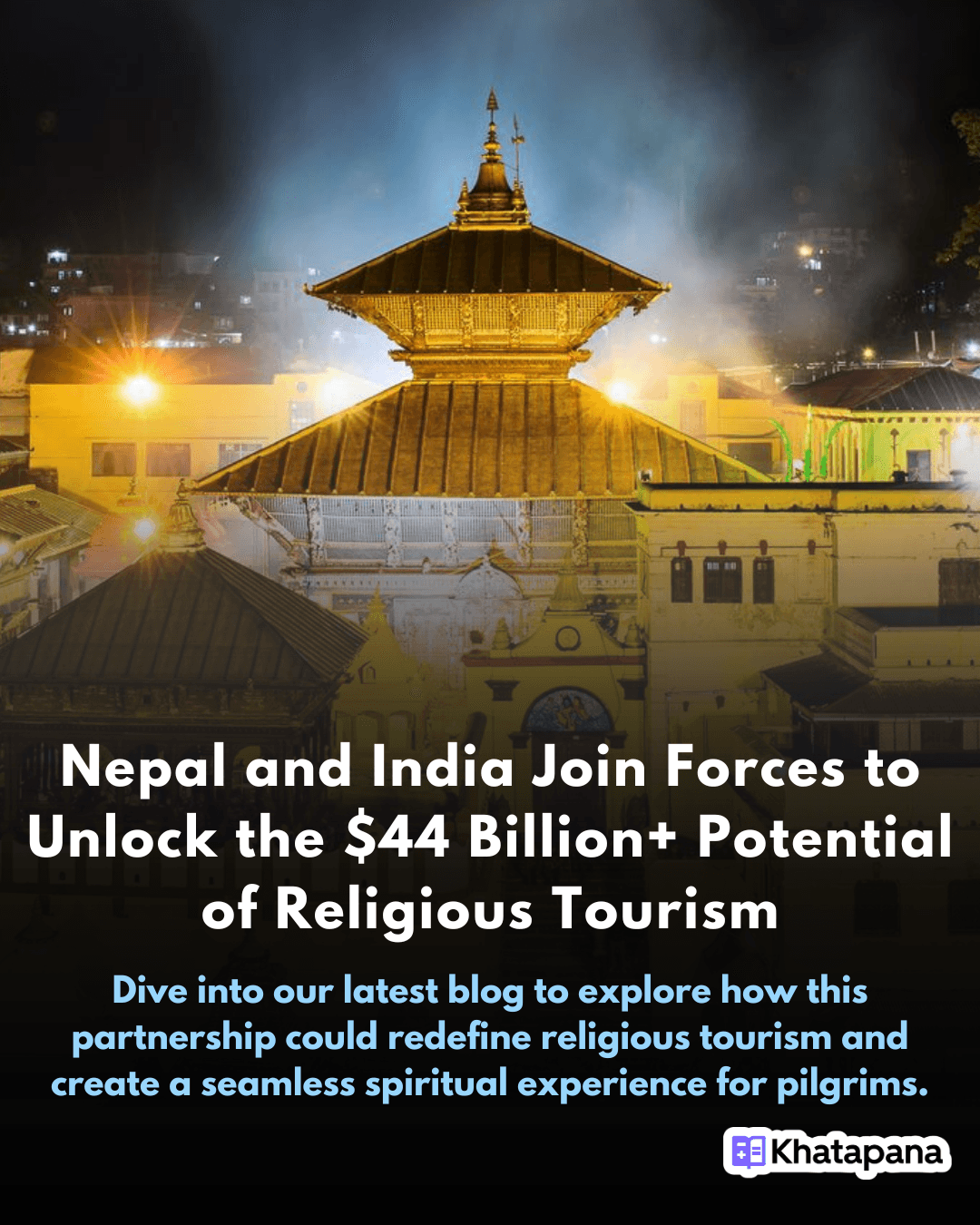
Nepal and India, two nations rich in cultural and spiritual heritage, are collaborating to unlock the vast potential of cross-border religious tourism. With shared religious ties and centuries-old traditions, the two countries aim to leverage their sacred sites to boost tourism, foster economic growth, and strengthen bilateral ties.
Recent efforts include exposure visits, discussions, and commitments between tourism boards, entrepreneurs, and government agencies of both nations. This partnership not only promotes religious tourism but also addresses infrastructure challenges, creating new opportunities for economic growth.
India’s Flourishing Religious Tourism Sector
India is home to some of the most iconic religious events and destinations, such as the Kumbh Mela, which is celebrated as the world’s largest religious gathering. The 2025 Maha Kumbh Mela in Prayagraj is projected to attract over 400 million visitors in just six weeks. This single event demonstrates India’s capacity to organize large-scale religious tourism initiatives that significantly contribute to its economy.
The religious tourism market in India is valued at approximately USD 202.85 billion and is expected to grow at a 10.2% CAGR, reaching USD 441.19 billion by FY2032. Investments in road infrastructure, transportation, and digital platforms make India a leader in religious tourism promotions Untapped Religious Tourism Potential
While Nepal’s tourism industry is globally recognized for its adventure tourism, its religious tourism sector holds immense untapped potential. In 2023, 13.1% of all tourist arrivals were for religious purposes, underscoring the importance of Nepal’s spiritual destinations.
Some of Nepal's iconic religious sites include:
- Budhanilkantha Temple: Known for its reclining statue of Lord Vishnu, it draws thousands of visitors annually.
- Manakamana Temple: A popular wish-fulfilling shrine, easily accessible via cable car.
- Dakshinkali Temple: Revered for its Goddess Kali shrine and vibrant festivals.
- Pumdikot: Emerging as a favorite for panoramic views and the towering Shiva statue.
- Muktinath Temple: A sacred pilgrimage for Hindus and Buddhists, situated at 3,710 meters above sea level.
While these sites generate significant footfall, Nepal’s revenue from religious tourism has room to grow. For instance, Muktinath Temple alone attracts tens of thousands of international visitors annually, contributing millions to the local economy, yet logistical challenges like road infrastructure limit its full potential .
Opportunities and Challenges
Collaboration between Nepal and India offers vast opportunities to enhance religious tourism, but it also comes with challenges that must be addressed:
Opportunities:
- Cultural Exchange: Events like joint Ramayana Circuit promotions can enhance the visibility of shared heritage.
- Revenue Growth: Improved accessibility to religious sites could increase footfall and revenue.
- Infrastructure Investments: Shared investments in border and road infrastructure can support seamless travel.
Challenges:
- Infrastructure Gaps: Many Nepali religious sites lack adequate transportation and facilities compared to India.
- Digital Promotion: Unlike India’s targeted campaigns for Kumbh Mela, Nepal's religious tourism lacks cohesive marketing strategies.
Building the Future of Religious Tourism
To maximize its potential, Nepal needs to adopt a more strategic approach to religious tourism by:
- Leveraging Technology: Introducing apps and digital platforms for booking, navigation, and event information.
- Promoting Regional Events: Hosting international religious festivals to attract global pilgrims.
- Collaborating on Marketing Campaigns: Jointly promoting Nepal-India circuits, such as the Ramayana Circuit, to reach wider audiences.
With India's religious tourism market booming and Nepal’s growing recognition for its sacred sites, both nations have a unique opportunity to create a sustainable and prosperous religious tourism ecosystem.
Explore the sacred wonders of Nepal and India, from the grand Maha Kumbh Mela to the tranquil Muktinath Temple. Dive deeper into the possibilities of cross-border religious tourism and discover how it’s shaping the future of travel.
Read the full article on our blog to learn more about these sacred sites and their untapped potential!
Starting a business in Nepal?
Register your company online — name reservation, MOA/AOA, PAN/VAT and OCR filings, all in one place.


Related Blogs

Subscribe to our newsletter
Get latest news and updates directly to your email.