Nepal’s New MCSE Policy: A Game-Changer or Another Missed Opportunity?
Khatapana
December 29, 2024 2 min read
 Reviewed by Kailash Panday, Chartered Accountant & Corporate Lawyer
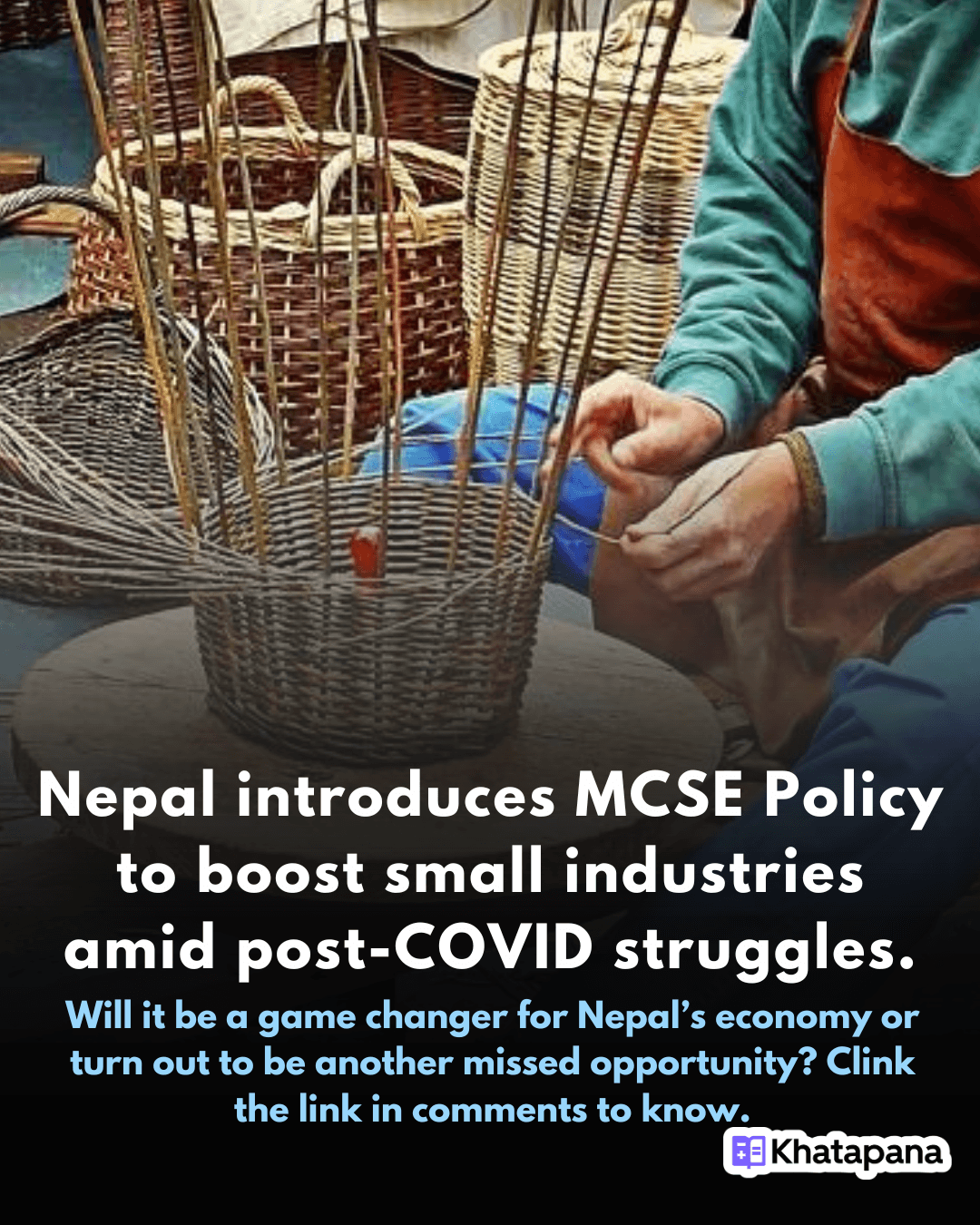
Nepal’s evolving markets and growing local industries are powered by micro, cottage, and small enterprises (MCSEs). These unsung heroes contribute 22% to the GDP and employ 2.74 million people, making them the backbone of the economy. However, structural challenges and post-pandemic setbacks have stifled their growth.
To turn the tide, the government recently introduced a bold policy aimed at revitalizing MCSEs. But can this policy truly unlock their potential, or will it falter like so many initiatives before? Let’s take a closer look.
The Policy: Bold Vision with Lofty Goals
Approved by the Cabinet on December 13, 2024, the new MCSE policy seeks to:
- Simplify registration and provide subsidized loans.
- Leverage returnee migrant workers’ skills.
- Build value chain linkages with medium and large-scale industries.
- Boost exports, particularly of traditional handicrafts.
- Ensure coordination across federal, provincial, and local governments.
The Micro, Cottage, and Small Scale Industry Promotion Centre will spearhead implementation, supported by the Ministry of Industry, Commerce, and Supplies.
Strengths: What the Policy Gets Right
- Addresses Key Challenges: By targeting infrastructure, market access, and financing, the policy tackles critical bottlenecks for MCSEs.
- Export Orientation: Strengthening traditional industries like handicrafts can bring global recognition and foreign revenue.
- Inclusivity Goals: Emphasizes support for marginalized communities, aligning with broader development objectives.
Shortcomings: Where the Policy Falls Short
- Execution Risks: Nepal’s history of frequent government changes could hinder consistent implementation.
- Funding Gaps: While subsidized loans are promised, no clear mechanism for equitable distribution is outlined.
- Coordination Challenges: The lack of synergy between government levels risks delays and duplication of efforts.
- Dependence on Imports: Heavy reliance on imported raw materials and high operational costs remain unaddressed.
What Needs to Happen Next
For this policy to succeed, the following measures are critical:
- Accountability Frameworks: Introduce performance metrics and publish progress reports to ensure transparency.
- Technological Support: Provide affordable digital tools to enhance MCSEs’ market reach and operational efficiency.
- Stakeholder Collaboration: Actively involve private sector stakeholders, development partners, and MCSE owners in execution.
- Policy Continuity: Ensure political stability and commitment to long-term policy implementation.
Final Thoughts: A Game-Changer or Missed Opportunity?
Nepal’s MCSEs hold immense potential, but their future hinges on effective implementation of this policy. While the vision is commendable, the execution must overcome bureaucratic bottlenecks, funding constraints, and coordination gaps.
If successful, this policy could transform Nepal’s economic landscape, empowering small businesses to thrive locally and compete globally. If not, it risks becoming another missed opportunity in a long line of unfulfilled promises.
What’s your take? Can this policy truly unlock the potential of Nepal’s MCSEs, or will it fall short of expectations? Let’s discuss!
Starting a business in Nepal?
Register your company online — name reservation, MOA/AOA, PAN/VAT and OCR filings, all in one place.


Related Blogs

Subscribe to our newsletter
Get latest news and updates directly to your email.