Petrol Sales Drop by 8.25% as Electric Vehicles Steal the Spotlight in Nepal
Khatapana
November 13, 2024 5 min read
 Reviewed by Kailash Panday, Chartered Accountant & Corporate Lawyer
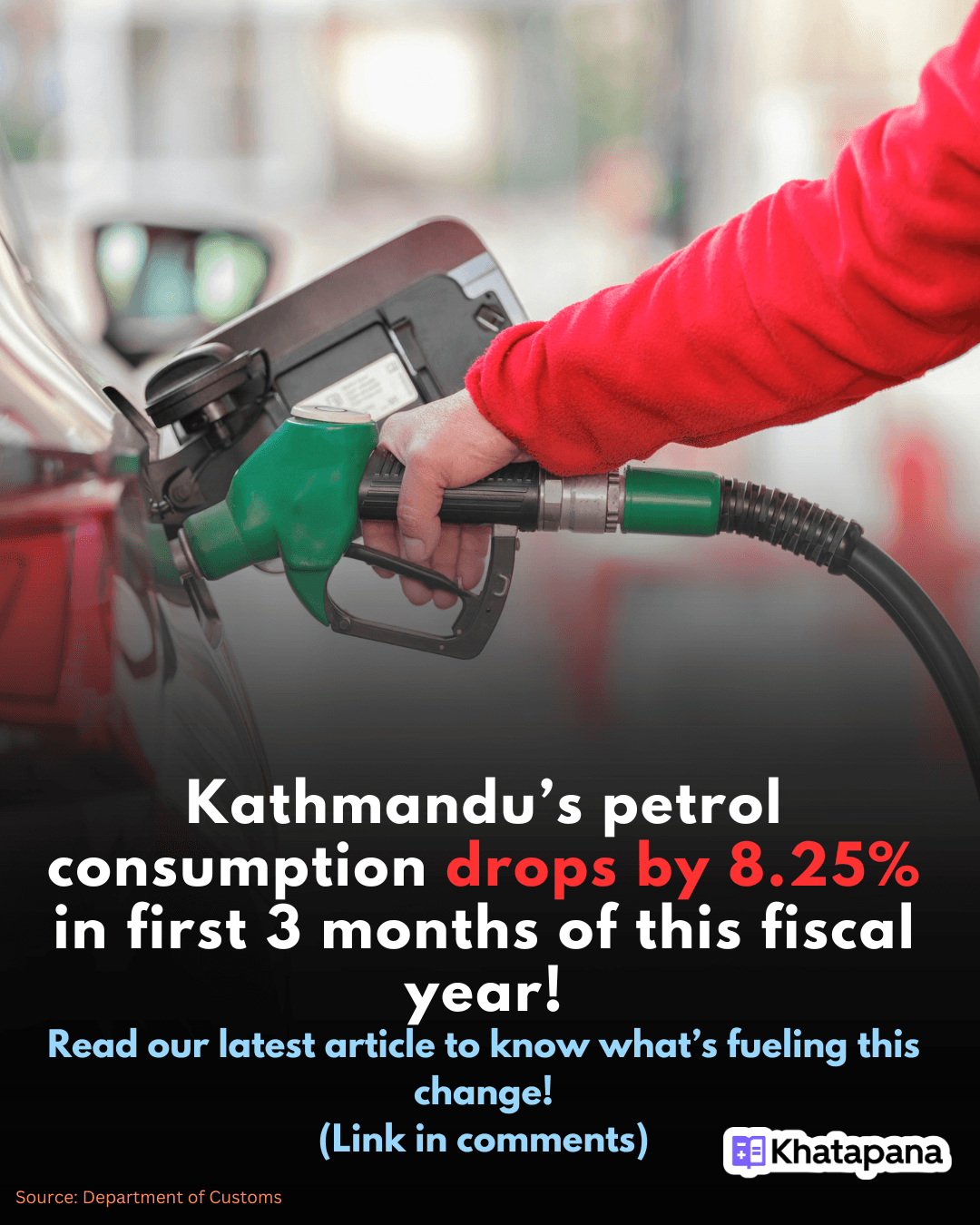
During your daily commute, if you counted, how many electric vehicles (EVs) would you see gliding by? Go ahead, try it—it might surprise you. Kathmandu Valley is buzzing with a new kind of energy, and it’s not coming from petrol stations. In fact, petrol sales just dropped by a hefty 8.25% in the valley in only three months, and EVs are popping up everywhere you look. What’s going on here?
This isn’t just about fewer trips to the petrol pump; it’s a major shift. While traditional petrol imports keep rising, people in Kathmandu are saying “no thanks” and instead charging up their cars at home, plugging into a new way of life powered by Nepal’s own hydroelectricity. So, what’s fueling this electric takeover?
Let’s dig into why Kathmandu’s ditching petrol, where it’s all headed, and what this change means for Nepal’s streets, wallets, and future.
Kathmandu Driving The Change
Kathmandu Valley—a place known for endless traffic jams and smoggy skies—is taking a whole new route. Petrol, something we thought we couldn’t live without, is getting sidelined. In just three months, petrol sales here dropped by a surprising 8.25%! Now, maybe that sounds like a small drop, but it’s actually a clue that things are changing in a major way.
Let’s look at the numbers: last year during the same three months, the valley was burning through 56,231 kiloliters of petrol. This year? Just 51,590 kiloliters. So, what’s going on? It’s not that people are staying home more or suddenly loving long walks. People are actually choosing electric vehicles instead of the usual fuel-powered ones. And this shift isn’t just about saving on petrol; it’s people saying they’re ready for something better—something cleaner, something cheaper.
And if this trend keeps gaining speed, Kathmandu might just be on its way to becoming one of the greenest cities in South Asia, aligning with the nation’s commitment to turn carbon-neutral by 2035.
Let’s Talk Numbers—The Real Deal
Take the Ripu Mardini Petrol Station, one of the biggest petrol suppliers in Kathmandu, and the most surprising case. Sales there dropped a staggering 26.44%. That’s not a coincidence or a slow month—that’s a trend. That’s a sign of people making the conscious decision to stop filling up their tanks and instead plugging in their cars. Imagine one out of every four drivers deciding, “No more petrol, I’m going electric.” That’s pretty powerful.
And yet, we’re seeing more petrol being imported overall, up by 12% this year. Doesn’t that sound odd? Here’s why: while Kathmandu is racing towards EVs, other parts of Nepal are still heavily dependent on petrol. It’s as if Kathmandu is in the fast lane while the rest of the country is stuck in neutral.
Why Have EVs Become So Much Popular?
Let’s dig into why people in Kathmandu are so excited about EVs, and it’s not just because they look cool and futuristic. They’re cheap to run, environmentally friendly, and incredibly convenient. Here are a few reasons people are moving to EVs:
- Money Talks: EVs are making a difference where it matters: the wallet. People are saving big on fuel costs, which can be a game-changer, especially when fuel costs keep climbing. It’s like getting a bonus every month simply by switching to an electric car.
- Breathe Easy: Kathmandu’s air pollution is more than an annoyance; it’s a health hazard. EVs offer a solution that feels proactive. Every EV on the road is one less vehicle spewing exhaust into the air, which means fewer respiratory issues and a healthier environment for everyone.
- Home is the New Gas Station: Charging at home is a new convenience that people are loving. Forget those long waits at the petrol station; now you just plug in, go to bed, and wake up to a full battery. Plus, the more electricity you consume, the lesser per unit price you pay. So it’s kind of a win-win!
- Using Nepal’s Own Energy: Here’s where the surge in EVs becomes especially interesting for Nepal. Nepal produces a lot of hydroelectric power—a locally sourced, renewable resource. By switching to EVs, people are fueling their vehicles with homegrown energy rather than imported petrol. This shift doesn’t just lower fuel costs; it keeps money within the country. Each EV on the road means more consumption of locally produced energy, which strengthens Nepal’s economy and reduces reliance on costly oil imports.
Why Should You Care?
This change isn’t just about individuals buying shiny new electric cars—it’s about Kathmandu setting a new standard. If enough people shift to EVs, the demand for petrol will continue to drop, forcing fuel companies and even government policies to adapt. Think about it: fewer petrol stations, more charging stations, maybe even incentives for people to buy EVs. If the trend sticks, Kathmandu could set the stage for the rest of Nepal to move toward an electric future.
This isn’t just a passing trend; it’s a glimpse into what Kathmandu could look like in ten years—a city with fewer fumes, clearer skies, and more money staying in people’s pockets instead of going to fuel companies. Plus, if Kathmandu can manage this shift, it could inspire the rest of the country and maybe even other South Asian cities to follow suit. Imagine the ripple effect of a cleaner, quieter city across the whole region.
What Needs to Happen for Kathmandu’s Electric Future?
Let’s face it—Kathmandu is leading the charge, but it still has some hurdles to clear. The big one? Infrastructure. How many charging stations do you pass by during your daily commute?If your answer is “not enough,” you’re spot on. We need charging stations, and we need them fast. Right now, charging options are still limited, and it’s tough to convince people to switch if they don’t know where their next “fill-up” will come from. When every mall, parking lot, and major street has a place to charge your EV, that’s when you know the city has fully embraced the electric shift.
But wait, is it all sunshine and roses? Definitely not. There are quite a few concerns as well.
Drawbacks of the EV Import Surge
Alright, Kathmandu’s electric dream is charging ahead, but let’s talk about some quirks we should keep an eye on. First up, there’s this thing called “EV dumping.” Sounds odd, right? Basically, as our demand for EVs skyrockets, there’s a chance Nepal could become a landing pad for older or second-rate models that didn’t make the cut in other markets—particularly from China. With our relaxed import rules, we might end up with EVs that aren’t quite as high-performing as we’d like.
Then there’s the question of repairs. EVs aren’t your average fix-it-up kind of vehicles—they need special tools and a bit of tech magic. But most local garages? They’re still playing catch-up. Without the right equipment or trained mechanics, EV maintenance could be a bit of an adventure (and an expensive one) until the city gears up with the right resources.
And here’s a cheeky twist: some importers are getting creative with the customs labels, bringing in giant, powerhouse EVs but registering them as smaller, budget-friendly cars. So, they pass through customs with a wink and a tax cut, only to hit the market in full-blown “beast mode.” Sure, it’s clever, but it’s also pushing the limits on our roads and energy grid.
So, while Kathmandu’s electric future looks bright, a few roadblocks could keep things interesting.
Read more about the challenges of EV imports in Nepal!
So, What’s Next?
The valley is truly at a turning point, and this shift to electric isn’t just a trend—every EV on the road means cleaner air, quieter streets, and less money flowing out of Nepal for imported fuel. It’s Kathmandu saying, “We’re ready for a smarter, greener future.” The best part? This isn’t some distant dream. It’s happening now, with more EVs hitting the streets every day. Imagine a Kathmandu where the morning rush doesn’t come with a cloud of exhaust fumes or long lines at petrol stations. We’re talking about a city running on Nepal’s own energy, investing in clean air.
But with this change come a few things to watch out for. We don’t want to see Nepal becoming a dumping site for outdated EVs, or owners struggling with limited maintenance options. And let’s not forget those oversized imports sneaking in as “smaller” models. If we can manage these quirks, the electric revolution in Kathmandu could be a game-changer for everyone.
And if you’re ready to be part of this shift, you don’t necessarily need to buy an EV tomorrow. It could mean considering an EV next time you’re looking for a car, supporting local initiatives for more charging stations, or simply spreading the word. This is about Kathmandu’s future streets and the quality of life for everyone who calls this city home. We’re all part of this movement—let’s make it count.
Starting a business in Nepal?
Register your company online — name reservation, MOA/AOA, PAN/VAT and OCR filings, all in one place.



Related Blogs

Subscribe to our newsletter
Get latest news and updates directly to your email.