103 Local Bodies in Nepal are Without Budgets Two Months into FY 2024/25: A Growing Concern?
Khatapana
September 15, 2024 3 min read
 Reviewed by Kailash Panday, Chartered Accountant & Corporate Lawyer
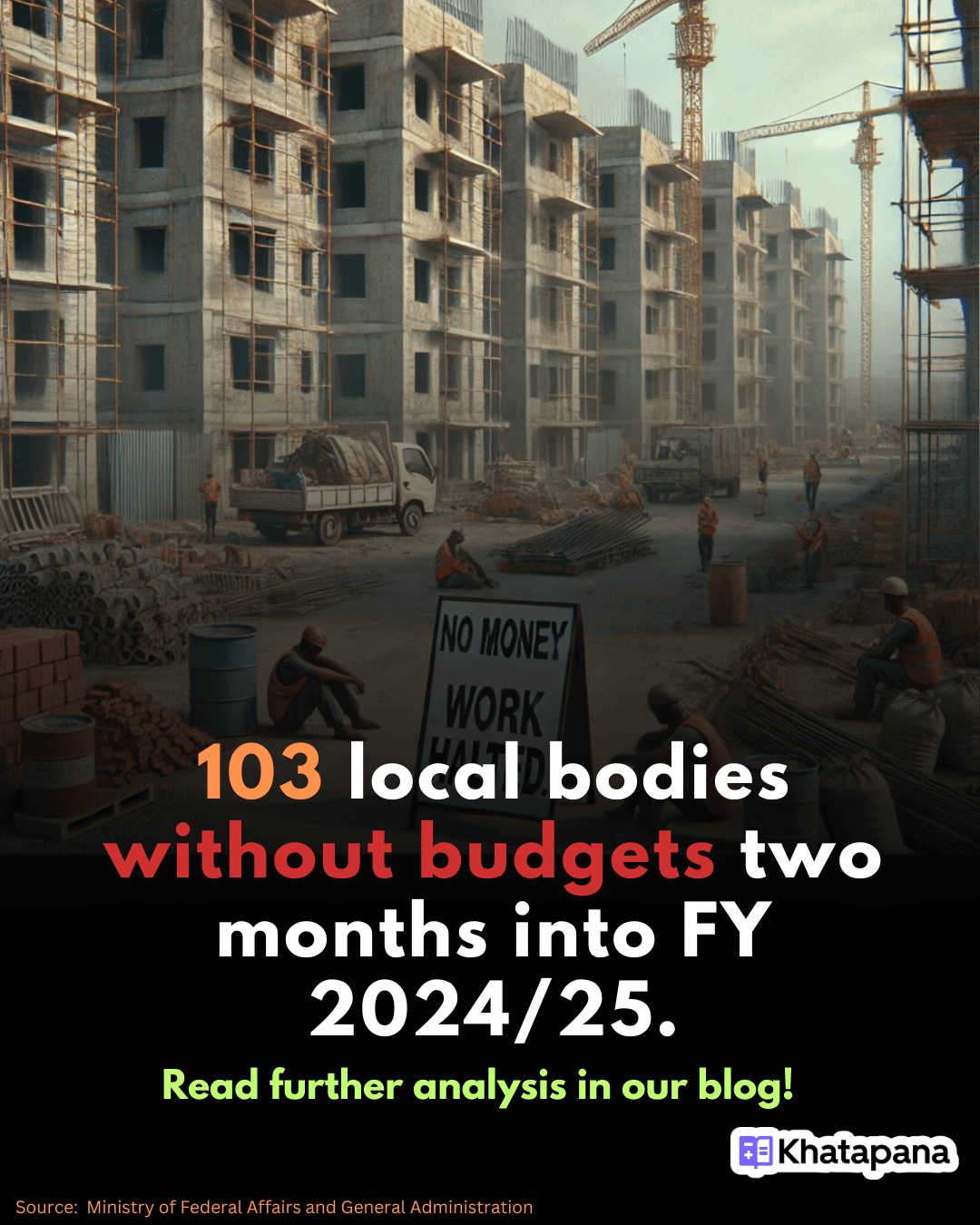
Two months into the fiscal year 2024/25, 103 out of 753 local bodies in Nepal have yet to present their budgets. This delay in budget presentations has had widespread consequences for local governance, the delivery of public services, and infrastructure development across the country. Despite the June 25 deadline for local bodies to finalize and present their budgets, many municipalities remain in non-compliance, leaving crucial projects stalled and residents underserved.
Why is the Delay Happening?
Multiple factors contribute to the budget delays across local bodies. Among the key reasons are political instability and internal disputes within local governments. For example, in Godawari Municipality, budgetary procedures were delayed due to a legal case involving the mayor. However, such cases are not unique to one municipality and reflect a broader challenge in fiscal governance and management at the local level.
Other issues include:
- Weak Fiscal Governance: In provinces like Madhesh, where 47 out of 136 municipalities have failed to present their budgets, weak financial management and administrative inefficiencies are major concerns.
- Disparities Across Provinces: There is a marked difference in how provinces have complied with the budgeting process. While Gandaki Province leads with 96.5% compliance (82 out of 85 municipalities presenting their budgets), Madhesh Province trails far behind at just 65.4%. This disparity reflects regional differences in administrative capabilities and governance structures.
- Coordination Issues: Many municipalities struggle with internal coordination and the timely submission of budgetary documents to their respective councils, further complicating the process.
The Scale of the Problem
According to the Ministry of Federal Affairs and General Administration:
- Madhesh Province: 47 out of 136 municipalities have failed to present their budgets.
- Koshi Province: 123 out of 137 local bodies have submitted their budgets.
- Bagmati Province: 103 out of 119 municipalities have presented their budgets.
- Gandaki Province: 82 out of 85 municipalities have presented their budgets.
- Lumbini Province: 95 out of 109 local bodies have submitted their budgets.
- Karnali Province: 74 out of 79 municipalities have complied.
- Sudurpaschim Province: 84 out of 88 local bodies have presented their budgets.
While Gandaki Province leads with 96.5% compliance, Madhesh Province remains the worst performer, with only 65.4% of municipalities presenting their budgets. This discrepancy indicates weaker financial governance in certain regions, particularly in Madhesh.
Impact of Budget Delays
The failure to present budgets on time has serious consequences:
- Disruption of Public Services: Local governments are responsible for essential services like healthcare, education, sanitation, and infrastructure development. Without approved budgets, these services remain underfunded, affecting millions of people, especially in rural areas. Schools and health facilities risk running out of resources, and ongoing projects remain incomplete.
- Stalled Infrastructure Development: Without a proper budget, local municipalities cannot fund infrastructure projects such as road construction, building of public offices, or water management systems. This year, for example, Nepal managed to blacktop 675 kilometers of roads, just short of its target of 800 kilometers. The delay in presenting budgets further stalls such projects, delaying progress.
- Administrative Inefficiencies: Municipalities without budgets are unable to operate accounts and fund day-to-day activities. Local officials cannot access the necessary financial resources to pay staff, operate offices, or initiate new projects, leading to growing inefficiency. A source in the National Natural Resources and Fiscal Commission noted that municipalities failing to present budgets have halted their administrative programs entirely.
- Economic Impact: Municipalities’ inability to operate effectively also affects local economies. Public projects often generate jobs and opportunities for local businesses. Delayed budgets halt public works, leaving workers and contractors without payment, and further dampening local economic growth.
- Provisional Budgets: The law requires that municipalities which cannot approve budgets must present a provisional one. However, many municipalities have failed to do so, further stalling necessary public services. According to the National Natural Resources and Fiscal Commission, municipalities without budgets must grant financial authority to the municipal head within seven days after the budget deadline. Failure to do this prevents municipalities from operating their accounts, worsening the administrative paralysis.
Comparison to Previous Years
The budget delay this year marks a sharp increase compared to the previous fiscal year, 2023/24, when only 42 local bodies missed the deadline. The significant rise to 103 this year highlights systemic problems in local governance and financial planning. If this trend continues, it risks affecting long-term development projects and the broader economic progress of the country.
Consequences for Future Development
As local bodies are central to the implementation of development projects, delays in their budget approval process could result in the overall stagnation of Nepal’s infrastructure and development goals. If municipalities continue to fail to present their budgets on time, critical projects in areas such as road construction, public health, and education will face significant delays, directly impacting the quality of life for citizens.
In conclusion, the delay in budget presentation by 103 local bodies has highlighted the need for improved financial governance and accountability. The impacts of these delays are widespread, affecting public services, infrastructure development, local economies, and administrative efficiency. To avoid future setbacks, local governments must streamline their budget approval processes and address the underlying issues contributing to these delays. Improved oversight from provincial and federal authorities could help ensure that local municipalities meet their financial obligations on time.
Starting a business in Nepal?
Register your company online — name reservation, MOA/AOA, PAN/VAT and OCR filings, all in one place.


Related Blogs


Subscribe to our newsletter
Get latest news and updates directly to your email.