Government Salary Scale Nepal 2083/84: Kharidar, Nayab Subba
SalaryInBox
January 17, 2025 5 min read

Quick answer
From Shrawan 1, 2083, civil servants got a 10% basic pay rise plus a 10% incentive allowance. A Kharidar starts at Rs 36,192, a Nayab Subba at Rs 38,203 and a Section Officer at Rs 48,058 a month before grades.
- Basic pay up 10% from Shrawan 1, 2083, the first rise since 2079.
- A 10% monthly incentive allowance comes on top of basic pay.
- Grade rates add more each year (e.g. Rs 1,206 per grade for Kharidar).
Figures are from news reports of the FY 2083/84 scale; confirm grade rates against the official Ministry of Finance circular.
From Shrawan 1, 2083 (FY 2083/84), Nepal's civil servants got a 10% rise in basic salary, plus a monthly incentive allowance equal to 10% of the new salary. Reports call this an increase of about 21%. A Kharidar now starts at Rs 36,192 a month, a Nayab Subba at Rs 38,203, and a Section Officer at Rs 48,058, before grades and allowances. The Rs 5,000 monthly dearness allowance continues.
In this guide, we’ll break down the 2083 salary structure for civil servants, including allowances, career advancement opportunities, and a detailed look at how government roles compare with private-sector jobs.
Updated Salary Scale for Government Employees in Nepal for 2083/84
Nepal’s government salary structure is organized into gazetted officers, non-gazetted officers, and support staff, with salaries based on their grades and positions. Below is the official monthly base salary as per the revised structure:
Government salary scale in Nepal 2083/84 (starting basic salary)
| Post / class | FY 2079/80 – 2082/83 (Rs) | FY 2083/84 from Shrawan 1, 2083 (Rs) |
|---|---|---|
| Chief Secretary | 77,211 | 84,932 |
| Secretary (Special class) | 72,082 | 79,290 |
| Joint Secretary (Gazetted first class) | 56,787 | 62,466 |
| Under Secretary (Gazetted second class) | 48,737 | 53,611 |
| Section Officer (Gazetted third class) | 43,689 | 48,058 |
| Nayab Subba (Non-gazetted first class) | 34,730 | 38,203 |
| Kharidar (Non-gazetted second class) | 32,902 | 36,192 |
| Non-gazetted third class | — | 30,373 |
| Office assistant (first level) | — | 27,172 |
Notes on the table:
- Section Officer: one source gives Rs 48,056 instead of 48,058.
- Incentive allowance: not included in the table. It adds 10% of the basic salary.
Grade rates and salary with full grades (FY 2083/84)
| Post | Grade rate (Rs) | Grades | Salary with grades (Rs) |
|---|---|---|---|
| Chief Secretary | 2,831 | 2 | 90,594 |
| Secretary | 2,643 | 2 | 84,576 |
| Joint Secretary | 2,082 | 7 | 77,040 |
| Under Secretary | 1,787 | 8 | 67,907 |
| Section Officer | 1,602 | 8 | 60,874 |
| Nayab Subba | 1,273 | 10 | 50,933 |
| Kharidar | 1,206 | 10 | 48,252 |
| Non-gazetted third class | 1,012 | 7 | 37,457 |
| Office assistant (first level) | 906 | 2 | 28,984 |
Did You Know?: The Kharidar salary in Nepal, which starts at NPR 36,192, also includes annual increments, allowances, and festival bonuses, making it an attractive option for entry-level administrative roles.
Support Staff
| Position | Base Salary (NPR) | Grade Salary (NPR) | Total Monthly Salary (NPR) |
|---|---|---|---|
| Driver (First Class) | 32,653 | 1,728 | 34,381 |
| Driver (Second Class) | 30,917 | 1,634 | 32,551 |
| Driver (Third Class) | 27,508 | 1,457 | 28,965 |
What Makes the Kharidar Position Unique?
The Kharidar position is a non-gazetted second-class role, often considered a gateway to more senior administrative positions in Nepal’s civil service. Known for its essential role in day-to-day operations, Kharidar positions offer:
- A structured starting salary of NPR 36,192 with grade increments.
- Opportunities for promotion to higher positions like Nayab Subba and eventually Section Officer.
- Additional benefits such as allowances, pensions, and medical reimbursements.
Allowances and Benefits for Government Employees
Civil servants in Nepal enjoy a range of benefits and allowances that significantly enhance their total compensation:
1. Housing Allowance
- Employees receive 10%–20% of their base salary as a housing allowance based on their grade and posting.
2. Festival Bonus
- An annual festival bonus equivalent to one month's salary is provided, typically during Dashain.
3. Transportation Allowance
- Employees posted in remote or rural areas receive special transportation allowances to compensate for travel and logistics.
4. Pension and Gratuity
- Government jobs offer a lifetime pension after retirement, calculated based on the final drawn salary and years of service.
5. Medical Benefits
- Civil servants and their families are eligible for medical reimbursements or subsidized treatment at government-approved facilities.
Career Pathways in Nepal’s Civil Service
One of the key advantages of government jobs in Nepal is the structured career progression, which combines annual increments, training, and competitive exams. Here’s how you can advance in civil service:
1. Entry-Level Roles
- Non-Gazetted Officers (Kharidar, Nayab Subba): Entry-level roles with promotion opportunities based on tenure and internal exams.
2. Gazetted Officers
- Section Officer to Under Secretary: Officers progress through higher administrative roles by passing the Lok Sewa Aayog (Public Service Commission) exams and undergoing leadership training.
Promoting Salary Transparency: Should the Private Sector Follow Suit?
One of the standout features of government jobs in Nepal is the transparency in salary structures. Government employee salaries are publicly disclosed, providing clarity on compensation across various positions. For instance, the Kharidar salary in Nepal or the Secretary’s pay scale is well-documented and updated regularly, making it easy for employees to understand their earning potential and plan their careers.
But can the same be said for the private sector?
The private sector in Nepal often lacks this level of transparency, leaving employees uncertain about whether they are being paid fairly for their roles and responsibilities. Salary transparency is not just about disclosing numbers—it’s about creating trust, fostering equality, and enabling individuals to make data-backed career decisions.
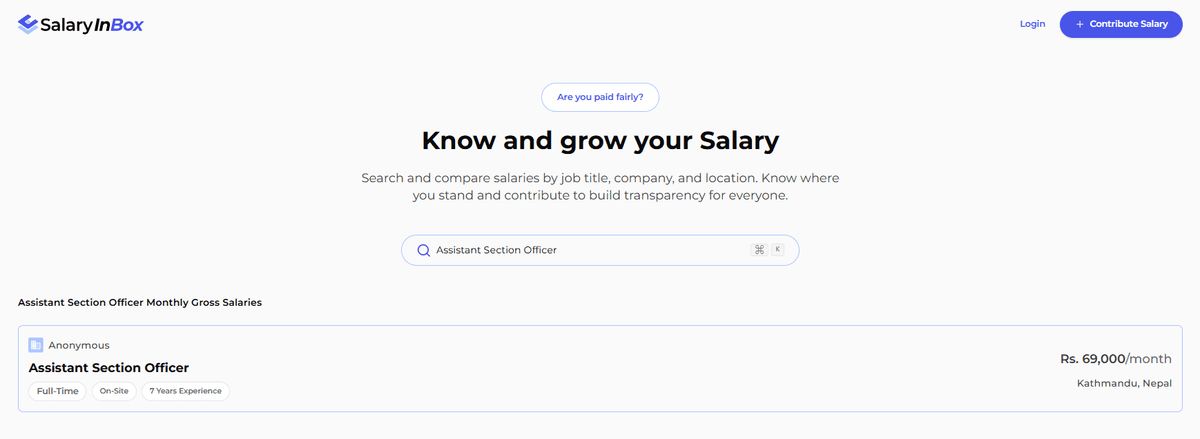
How SalaryInBox Can Help Bridge the Gap
At SalaryInBox, we believe that salary transparency should extend to both the government and private sectors. By contributing salary data anonymously, employees across all industries can help build a comprehensive database that:
- Promotes Fairness: Allows professionals to compare their salaries with industry averages.
- Empowers Negotiations: Provides the data individuals need to advocate for fair pay during hiring or promotions.
- Supports Career Planning: Enables job seekers to identify high-paying sectors and roles, helping them make informed career decisions.
How You Can Contribute
Whether you are a government employee with a structured salary or a private-sector professional, you can play a role in promoting salary transparency. Here’s how:
- Visit SalaryInBox and anonymously input your current salary, role, and experience level.
- Access real-time salary trends across industries, regions, and job titles.
- Join the movement to make salaries more transparent in Nepal, benefiting both employees and employers.
Insight: SalaryInBox aims to create an ecosystem where salary decisions are driven by data, not guesswork—ensuring equal opportunities for all professionals.
Why Salary Transparency Matters
- For Employees: It empowers individuals to know their worth and negotiate better compensation.
- For Employers: It helps companies benchmark salaries to stay competitive and attract top talent.
- For Society: It reduces pay gaps and promotes a fairer, more inclusive job market.
In government jobs, employees know exactly what they’re entitled to—whether it’s a Kharidar’s salary or a Nayab Subba’s pay. Imagine a future where private-sector employees enjoy the same level of clarity. Platforms like SalaryInBox are making that vision a reality.
Join the Transparency Movement
Visit SalaryInBox today and anonymously contribute your salary data. Together, we can make salary fairness and transparency a standard practice in Nepal, across both the government and private sectors.
FAQs: Government Salaries in Nepal
1. What is the Kharidar salary in Nepal?
The Kharidar salary in Nepal starts at NPR 36,192 starting basic salary from Shrawan 1, 2083, before grades and allowances.
2. What is the salary of a Nayab Subba in Nepal?
A Nayab Subba (Non-Gazetted First Class) earns a base salary of NPR 38,203 starting basic salary from Shrawan 1, 2083.
3. Did government salary increase in 2083?
Yes. The FY 2083/84 budget (Jestha 15, 2083) raised basic pay by 10% and added a 10% incentive allowance. Cabinet approved the new scale on 22 July 2026.
4. How are government employees promoted in Nepal?
Promotions are based on performance reviews, tenure, and results of competitive exams conducted by the Public Service Commission.
Why Choose a Civil Service Career in Nepal?
A career in Nepal’s civil service offers job security, structured growth, and generous benefits, making it one of the most reliable career options. Whether you aim to become a Kharidar, Section Officer, or even a Secretary, the government sector provides a stable and rewarding pathway with opportunities for long-term financial security. You may also want to explore Nepal Army salary.
Interested in learning more? Bookmark this page for updates on government salaries and career tips!
Have questions about the Kharidar salary in Nepal or Section Officer salary in Nepal or other government positions? Share your queries or insights in the comments below!
Run your business from your phone
Register companies, track compliance and manage payroll from your phone with the Khatapana app.


Related Blogs



Subscribe to our newsletter
Get latest news and updates directly to your email.